angelacar
SkillsTravel

I am the type of person who likes to be prepared for every situation. That includes making sure that my car is prepared for every situation as well. There are a lot of helpful items that can be kept in a plastic bin in your trunk or the glove compartment just in case you need them. They can also be removed if you need the space. Mileage varies on which items you want to keep in your own car, but here are a few ideas:

1. Jumper Cables
Use these if your battery dies. A good Samaritan can help with the rest.

2. Tire Repair Tools
A tire gauge will let you know the pressure in your tires. Other tools include a jack, a tire iron, and a spare tire. Failing that, you can use a tire inflater or sealer that might get you to a gas station.

3. Duct Tape
It can fix all kinds of things.

4. Your Car Manual
I know that no one wants to read the manual but if you have a specific question you could find the answer in there.

5. Flashlight
You can use your phone for this. However, if you need a light for an extended period of time, you can drain your battery. Keep an actual flashlight around, just in case.

6. Road Flare
Safety first when it’s dark out or you need to grab people’s attention!

7. Small Fire Extinguisher
You may never need it but it could be life-saving if you do.

8. Your Insurance and Vehicle Information

9. Bluetooth Device
Handsfree phone calls are the safest way to go.

10. Phone Charger
You never know when you might need it.

11. Cleaning Products
I would recommend plastic bags, tissues and/or paper towels for any kind of mess that you encounter. If you’re really into cleaning, you can include a hand-held vacuum or an air freshener.

12. Non-Perishable Food
I recommend a bottle of water and a food item that doesn’t need to be heated or prepared like jerky or granola bar. You can keep this in a collapsible cooler if you’re on a road-trip. This will come in handy if you’re stuck somewhere.

13. Anything that can protect you and your car from the elements
A spare umbrella or jacket will help when you are outside of the car. I would also recommend a towel or a change of clothes to avoid ruining the interior of your car in different kinds of weather.

14. Blanket
A blanket can cost around $5 and will be helpful if someone in your passenger seat wants to take a nap or if you need to get warm.

15. Extra Money
You may have money in your wallet at all times. If not, keep some spare change or a small amount of money in your car. You might need money if you run into an unexpected tollbooth or you need to tip a tow truck driver.

16. Small First Aid Kit
You can go to the hospital for the big stuff. This is just for small injuries and won’t take up much room.

17. Sunglasses
These will protect your eyes and help you drive better.

In the end, what you keep in your car is your business. It comes down to what suits your needs. For example, if your share a car maybe you don’t have a say about what goes in. Let this be a starting point for you to drive more safely. It can also be a great list to prepare for the road trip of your dreams! Happy driving!

Image: Pexels

halloween
Culture

Halloween is a night of fun, and of mischief. Whether you’re on campus or at a party in the city, it’s always good to have some safety tips in mind.

1. Do stuff with friends. Your friends take care of you and you take care of your friends.

2. Have a breathe­able and walk­able costume. Have back up shoes. If it’s cold, have some layering possibilities.

3. Avoid having a seance. Avoid all attempts to talk to spirits or bring back the dead.

4. Eat before drinking. Don’t leave your drink lying around. Don’t drink too much.

5. Know your surroundings when you’re going to a place. Know the people at the place. When you arrive somewhere, locate the bathroom and know your escape routes.

6. Charge your phone and keep it with you. Also have all of your emergency contacts in your phone, as well as your friend’s numbers.

7. Stay if it’s fun, don’t if it’s lame. No stress.

8. Follow your this-­is-­sketchy gut.

9. Have a way to get home or have a place to crash (friends from rule #1).

10. Carry a mini-flashlight or glowsticks with you to provide light when it gets too dark.

11. Have fun and be smart!

How will you be staying safe tomorrow? Happy Halloween!

Image: James Lee

drink
CultureHealth

Have you ever heard the phrase “Pick your poison?” It commonly refers to drinking, but many of us drink the “poison” anyway. This is because drinking can make you feel differently than you usually do. It is literally intoxicating and lowers your inhibitions. While it may provide a good feeling, it does not come without consequences. That is why is important to drink responsibly, which means taking personal responsibility even while under the influence of alcohol. Luckily, doing so is quite easy.

Here are the ways you can drink responsibly:

  1. Drink in moderation. We all know about hangovers, but sometimes we still get them. Instead of waking up with a headache, learn when to stop. If you don’t stop, you risk fatal alcohol poisoning. That is just a short term consequence. Alcohol is an addictive substance and if you are not careful, drinking alcohol might become a bigger part of your life. Alcoholism and poisoning can be prevented by drinking in moderation.
  2. Make sure you have a safe way to return home. We’ve all heard this before, but that is for a good reason. Driving drunk will not just get you a ticket. You risk your life and the lives of others if you are driving under the influence. I won’t get behind the wheel with even one drink in my system. Don’t even get in the car with someone else that has been drinking. People with a higher tolerance are still not completely capable drivers. You may not want to upset your friend by turning down a ride, but being perceived as rude is better than risking both of your lives. Have someone take their keys away. Even walking home alone is risky. If no one knows where you are, they can’t find you if you need help. You could easily stumble into the street and get hit by a car. Make sure you have a designated driver or a cab to take you home.
  3. Learn your limits. In the article, “Alcohol, Drugs, and Personal Choice: Why College Parties Are Overrated,” Shilpa Kancharla points out that while drinking can be fun, it can also cause personal trouble. You will have to face what you did in the morning. If a future employer sees pictures of you misbehaving online, it can determine whether or not you are hired. Everyone is affected differently by drinking, so don’t force yourself to keep up with everyone else. Try to stop drinking before you do something you regret.
  4. Drink in a safe and comfortable environment. Drinking can affect your judgment and coordination, which makes it easier for you to be harmed. It is not your fault if someone else harms you, but do try to keep people you trust around when you are drinking. You never know when you might need them. If you ever don’t feel safe, remove yourself from the situation if you can.
  5. Consult the Blood Alcohol Concentration (BAC) chart to give you an idea of how drinks affect you based on your body weight.
  6. Don’t bother drinking until you are legally allowed to. Different countries have different legal drinking ages. Different households have different rules about drinking. Just know that there is a reason the age limit is what it is. Some reports say your brain isn’t even done developing until you are twenty five. Don’t get arrested for a few hours of fun. You have your whole life ahead of you.

These are just a few tips to drink more safely. It’s okay to enjoy yourself, but keep in mind what you are risking when you do so. Use your judgment. The most important thing is to make it through the night safely.

Image: Arvind Grover

travel budget
CultureEducationSkillsTravel

Welcome to week two of Carpe’s “Travel Series.” This week, I share my best tips on how to travel on a budget. Having just returned from a semester in Denmark, I had the opportunity to take several trips and learn some important lessons on how to cut down costs while on the road.

TRAVELING ON A BUDGET

1. Create a budget. Before you buy tickets, book accommodations, or reserve tickets, consider how much money you will also need for food, transportation, and purchasing appropriate clothing if you do not already own it. Take in all of these factors and shape your budget around what matters most to you. If you care about staying in a hotel that is centrally located, you might need to spend less on dining out or on event or sightseeing tickets. If you care more about excursions, plan your budget around those activities. Create a simple budget spreadsheet and email it to yourself or print out a small version for easy travel access!

2. Stick to your budget! It is easy to get caught up in the excitement of being somewhere new, but if you are careless about your spending then the end of the trip will feel more like a headache than a vacation. Keep a small notepad or note in your phone documenting how much money you spend each day so you can calculate how much you have per day going forward.

3. Consider a hostel. Hostels can be a great option for cutting costs, especially if you are traveling in a group. The key element to traveling safely while staying in hostels is to check the ratings from previous guests, and to make sure that there are lockers with locks that you can rent to store your valuables. This option also works well if you are traveling with a group of 5-10 people, as most hostels have community rooms that are filled on a guest-to-guest basis. And remember to bring shower shoes, as bathrooms are often co-ed and shared by an entire floor.

4. Split with a friend. You learned it when you were young, and you’re about to hear it again: sharing is caring! Splitting meals and accommodations is great way to cut down on cost. Also consider coordinating outfits so that you can both bring half the amount of clothes and share along the way. Agree specifically on what you are willing to share before you leave for the trip or you might find yourself in an awkward position, whether it be not wanting to lend a favorite sweater or not being able to wear a pair of shoes you were counting on wearing. Talking beforehand clears up most of these problems and helps you pack more appropriately.

5. Bring a water bottle. Rather than continually buying bottles of water, bring along your own durable water bottle that you can fill with safe/clean tap water. This trick not only saves you money but helps you help the environment! Remember: you are not allowed to have any liquid in the container while going through security at the airport.

6. Use Space Saver Bags for clothing. Tip: Avoid “vacuum-seal” brands. Using space saver bags allows you to bring more variety of clothing, meaning you are less likely to splurge on an essential item you forgot to pack because you didn’t have space. I love these bags because I can fit more into a smaller space, bring a smaller bag, and travel more simply and conveniently. I’m not as worried about whether or not I will be able to fit my bags into the overhead if I’m taking a train, and having less stuff to keep an eye on means that there there’s more time for fun and less time for stress!

How do you travel on a budget? We’d love to hear your tips!

P.S. How to stay safe when traveling.

travel series
CultureExploreTravel

TRAVEL SERIES

Traveling comes in all forms. Whether you are taking a one-week road trip or flying across an ocean to reach your destination, visiting new places is an integral part of learning about yourself and others. Seeing how different people live, work, and experience life helps break down the barriers between us and reveals that perhaps we are not all as different as we might have thought.

This travel series will cover a wide range of topics about how to travel, where to travel to, etc. Tune in next week for traveling on a budget. Let’s get going!

STAYING SAFE

1. Be aware of your surroundings. This does not mean you should be paranoid, but rather be aware of who is around you and be conscientious of anything that seems unusual or strange.

2. Watch your pockets. The smallest details will make the biggest difference. For instance, it is always a good idea to keep valuables such as your wallet, keys, phone, and identification (passport, drivers license) in a hard-to-reach pocket. This is to prevent pick-pocketing or accidentally allowing a precious item to drop from your bag without realizing it.

3. Tell someone where you are going. It is always a good idea to inform a close friend or family member of your travel plans. If something unexpected happens it is essential that somebody knows where you are and has a way to reach you in the case of an emergency. If you are traveling alone this is a crucial part of your planning, and is beneficial for you and also the people who care about you. If you are traveling with other people, this is still a good idea and highly recommended.

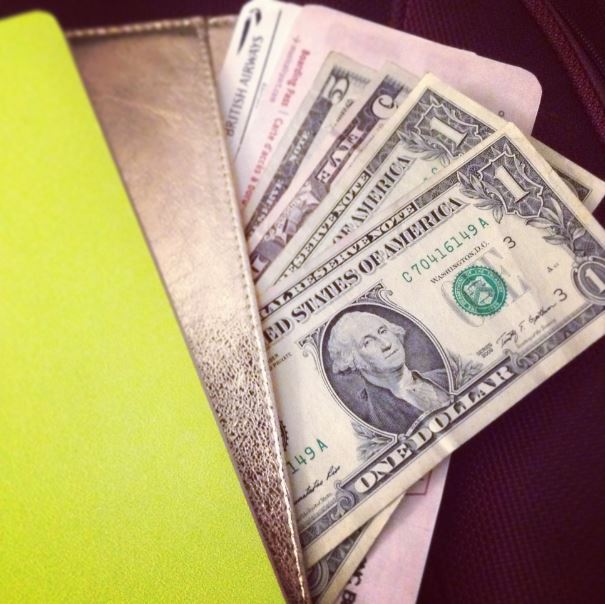
4. Keep extra cash hidden on you. It is always a smart idea to keep about twenty dollars of whichever currency you need on you at all times for those “just in case” moments. Tuck the bill(s) into a small pocket of your jacket or bag. Perhaps you get lost in a city and it becomes dark out – if you feel unsafe or have no idea how to get back to where you are staying, having that spare cash will likely enable you to grab a taxi and get home safely.

5. Decide on a meeting spot. If you are traveling with others, consider choosing a central meeting spot where you can go if someone loses the group or visits somewhere on their own. A good meeting point is one that is well-known by locals so you can ask for directions and is also typically busy during both the day and night in case a member of the group is waiting by him or herself.

6. Have information. This step will take you about 10-15 minutes, but it is well worth the hassle. Go through your itinerary and write down or type in all phone numbers of hotels and friends you are staying with, addresses of your accommodations, and emergency numbers of whoever city you are traveling to. Having this information might help you enjoy yourself because you can concentrate on having fun rather than trying to remember where you need to go at the end of the day! Also consider writing down all flight, train, or car reservation information ahead of time and print any tickets you will need. Store these in a safe and secure spot in your luggage.

In order to travel as stress-free as possible, it is essential that you plan. Like most situations, planning is the key to success. Spending 30 minutes going over these safety tips and collecting important information will save you hours of stress, confusion, and anxiety during your adventure!

Check out Travel Series Part II: Traveling on a Budget and Travel Series Part III: Choosing the Destination!