Freyan Billimoria
Professional SpotlightSpotlight

As young professional women, we have read more Levo League articles than we can count and have watched all of the Office Hours videos. While watching Office Hours, which is a series of conversations with extraordinary leaders, we were fascinated not only with those being interviewed, but the woman doing most of the interviewing. Freyan Billimoria is the host of Office Hours and the Director of Strategic Partnerships at Levo League, and we had the pleasure of interviewing her for a Professional Spotlight.

Freyan has worked in luxury marketing, managed donor relations at Teach for America, and has been the Director of Development at The White House Project. Freyan now spends her time managing partnerships, engaging influencers and leaders, and producing and hosting Office Hours at Levo League. Freyan’s ambition, organization, and work ethic are truly inspiring. Read on to learn more about how Freyan has learned to be a leader, what a day in her busy life looks like, and her latest favorite books!

Name: Freyan Billimoria
Education: B.A. in Interdisciplinary Studies and English Minor from University of California, Berkeley
Follow: Levo.com / Twitter: @freyanfb / Instagram: @freyanfb

Carpe Juvenis: How do you define “Seizing Your Youth?”

Freyan Billimoria: Exploring your world, trying new things, and learning every day.

CJ: You created your own interdisciplinary major focused on globalization with a minor in English for your undergraduate degree. How did you determine what to study and why create your own major?

FB: I entered Berkeley interested in the impact of globalization, but every time I took a course – whether in political economics or development studies or English – I felt like I was missing a part of the story. In order to understand the full picture, I thought it was important to draw upon many disciplines. Plus, I always got to take classes I was passionate about!

CJ: You are the Director of Strategic Partnerships at Levo League. You also host and head production of the video series, Office Hours. What do your roles entail and what skills do your roles require?

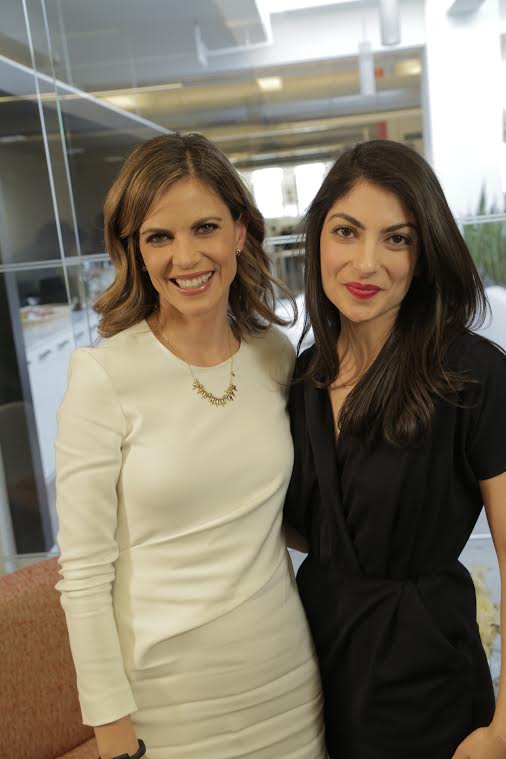
FB: My role at Levo is a total mix of things – true startup style! I manage partnerships with corporate clients, from startups to Fortune 500s; help engage leaders and influencers as they get to know Levo; and produce and host interviews with folks like Natalie Morales and Ariel Foxman for Office Hours. This entails a lot of relationship management, the ability to oversee multiple projects, communication skills, a clear head under pressure, and a healthy dose of caffeine.
Freyan 2

CJ: You’ve done many interesting things throughout your career such as organizing concerts in college, luxury marketing, managing donor relations at Teach for America, and being the Director of Development at The White House Project. What have you learned from these experiences and how have they influenced you with your current job?

FB: The importance of working meaningfully with people has been a huge thread throughout every role I’ve had. I’ve really learned the power of forming authentic relationships rather than operating transactionally. This mentality has been hugely helpful whether rallying community support for expansion, raising funds, navigating internal teams, or interviewing experts.

CJ: One aspect of your job entails producing events. What advice would you give to a young person who is interested in event planning?

FB: Event planning is one of my favorite activities, both in my personal and professional life! I think it’s vital that you have the ability to think strategically about the big picture – What is the purpose of the event? What do you want people to get out of it? How should they feel? – and to get incredibly micro when it comes to the details. And, of course, never underestimate the power of feeding people!

CJ: In your various roles, leadership has been important. How have you learned to lead and what does it mean to be a leader?

FB: I think leadership is always an evolution: no one is born a leader, and no one is ever finished with the process. I see it as the ability to move other people to collectively work towards an objective, especially in the face of uncertainty and changing conditions.

CJ: What has been one of the most unexpectedly interesting parts of your career to date?

FB: My second role at Teach For America was working on a growth strategy team helping to launch new sites. The opportunity to deeply understand communities in places like Ohio, South Carolina, and Appalachia was incredibly exciting and rewarding. To say no two days were alike is an understatement – no two hours were alike! We developed relationships, formed partnerships with school districts and universities, raised funds, and changed laws – sometimes all in the same day!

Freyan 4

CJ: Every day in your life must be different depending on your projects and the time of year, but what does a Monday look like for you?

FB: An average Monday starts with a quick breakfast of oatmeal with walnuts and dried cherries while powering through the news, emails… and, let’s be honest, my horoscope. Then it’s out the door I go. Once in our Union Square office, I set myself up with a cup of tea and dive in.

Mondays are chock full of meetings with our entire team, the editorial team, and occasionally the sales team. In between, I’m speaking with clients, working with our content team to plan for upcoming features, orchestrating future video shoots, navigating corporate requests, and wading my way through emails. In the evening, I head back to Brooklyn, where my partner and I convince ourselves to do a quick workout with varying degrees of success, and then give up and pour ourselves a glass of wine, sit down to dinner (favorites at the moment are homemade mushroom ramen and roasted eggplant with couscous and harissa), often with a friend dropping by. As it gets late, I close out a bit of work, take an old-lady constitutional around the neighborhood, and then it’s five minutes of (incredibly low-level) yoga before reading in bed.

CJ: What are your time management tips? How do you stay organized and efficient?

FB: I’m obsessed with email organization and my Google calendar. The only things that remain in my inbox are open items that require action – everything else is filed, whether it goes under a client’s name, or strategic planning.

My calendar is my baby – I believe in including everything you need time to do, from meetings and personal appointment to reminders and general “work time.” I color code so at a glance I have a sense of where my energy will go throughout the day.

CJ: What are your favorite books?

FB: So many! Latest favorites include Americanah, The Paying Guests, The Cuckoo’s Calling, and at long last, I finally read the entire Harry Potter series… and am so ready to start over again!

CJ: Any favorite news publications?

FB: The Week, The Daily Beast, NY Times, The New Yorker, NY Mag, and in very serious food news: Bon Appetit and Cherry Bombe.

Freyan 1 -a

CJ: What is an area, either personal or professional, that you are working to improve in and how?

FB: Learning to say no! At Levo, we’re lucky enough to have a lot of opportunities come our way, and part of my role is knowing how to graciously decline when the match or timing isn’t right. The same is true in my personal life – I’m learning to say a big YES to things that excite me, and a guiltless no when I find them draining.

CJ: What is a cause or issue that you care about and why?

FB: Ensuring women have opportunities to succeed is close to my heart. At Levo, we’re working to offer women the connections and resources they need to build careers and lives they’re passionate about – in turn, creating happier, healthier outcome for all of us.

CJ: Having a loaded schedule can sometimes be overwhelming. What do you do when you’re having a bad day and need to unwind or reset?

FB: Some combination of walking around the neighborhood, shaking up a cocktail, planning an amazing Friday, and sleeping a whole bunch usually does the trick. The key is to get out of your head and remember that work is only one part of your life.

CJ: What advice would you give your 20-year-old self?

FB: It’s all going to work out. Maybe not how or when you think it will, but amazing things are always around the corner.

Freyan B Qs

Images by Freyan Billimoria

a
Professional SpotlightSpotlight

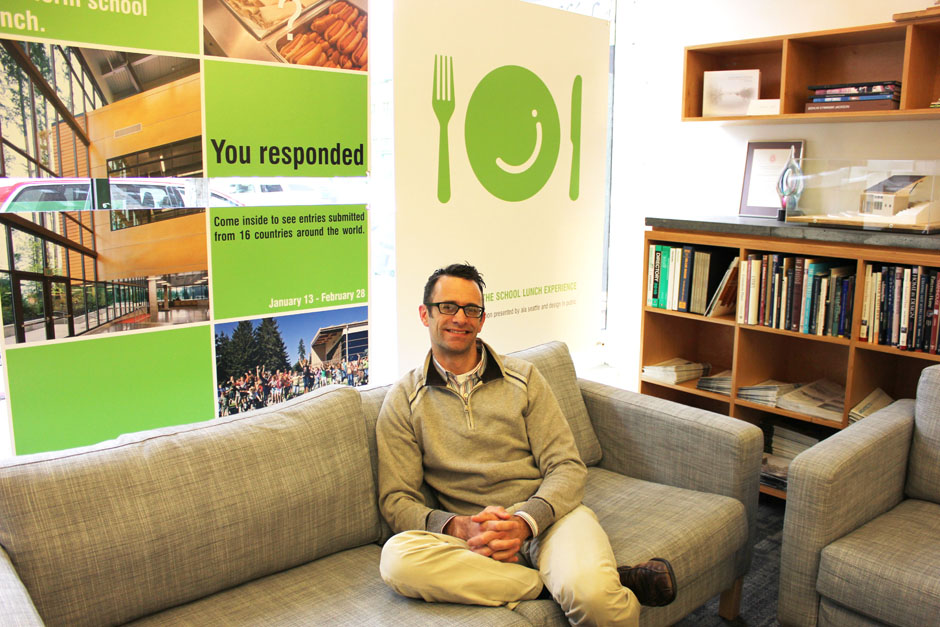
Being an architect requires much more than just designing buildings. Being an architect involves understanding a vision, asking lots of questions, and turning all of that information into a reality. J Irons, the interim executive director at the American Institute of Architects in Seattle, does exactly this. He asks questions, evaluates each situation, and turns ideas into a reality. J’s road to architecture is unique, and it took a lot of hard work and soul searching for him to realize his passions. J’s advice and thoughts about what it means to be an architect in this day and age is remarkable and thoughtful, and those interested in architecture as a profession or a hobby can learn a lot from his insight. Read on to learn more about how J got to where he is today, the advice he would give to those who are interested in architecture, and what he would tell his 20-year-old self…

Name: J Irons
Age: 39
Education: Bachelor of Arts in Landscape Architecture from University of California, Berkeley; Master of Architecture degree from the University of Washington
Follow: AIA Seattle / Design in Public

How do you define ‘seizing your youth’?

Capitalize on inspiration. There are lots of opportunities to explore the world. There are always more questions than answers. What stops most young people from really exploring those opportunities are preconceptions they have about what friends or family might think. It’s really important to respond to an inner voice and drive and take some chances.

You attended University of California, Berkeley and majored in Landscape Architecture. How did you determine what to study?

The road to Landscape Architecture actually went through an engineering field. I thought I was going to design sailboats. Instead, I started to go down a different path. Landscape Architecture was the perfect cross-section of creativity, working with people, and being outside.

c

How did you become interested in architecture?

One of my professors pulled me aside and suggested I might try architecture, and he asked if I would consider switching to the architecture program. It’s really flattering to have a professor take an interest and to think that I had some aptitude. I didn’t end up taking him up on it during my undergraduate studies.

The longer backstory to becoming an architect is that in the time between undergraduate and graduate, I was doing some soul searching. I was a foreman on a small crew and I was asking myself bigger questions - questions that couldn’t be answered on a residential scale. I decided to revisit some of my undergraduate teachings and discovered co-housing. One of the founders of the American CoHousing movement, Kathryn McCamant, gave a lecture that I saw. I phoned her up and asked about the internship program, met with her husband, and he decided to take me on for an internship. However, he encouraged me to get a degree in architecture.

I went from their office to the Berkeley campus admissions and asked for an application packet. I sat down and filled one out. I realized through the course of that internship at the CoHousing Company that architecture represented the next obvious step in my development as a professional.

You studied architecture for your Masters degree at the University of Washington. Please tell us about that experience.

I started graduate school in 2001 after moving up from San Francisco. I started studying Architecture in the three-year program, which was for people with non-Architecture backgrounds. I knew already that I wanted to become an architect.

What does it mean to be an architect?

Helping connect people’s ideas to change in their environment. For most of my professional design career I’ve worked with individuals on behalf of organizations, which is a more complex challenge than helping individuals translate vision into reality. Being an architect is really about deep empathy. It’s about expansive creative thinking. It’s about iterative process. It’s about leaving your ego at the door.

Successful design is not about the architect, but instead it is about the process that is created around the challenge of architecture and design. For me, being an architect is about asking expansive questions. It’s not about relying on the tenets of architecture, but it is about relying on commonly held principles that span the fields of design. I am constantly searching for opportunities to help resolve issues which are inherently interdisciplinary in nature and require a collaborative team effort to achieve.

What does being an Interim Executive Director at AIA Seattle entail?

It entails running two organizations, AIA Seattle and Design in Public. AIA Seattle is a 501c6 and Design in Public is a 501c3 so they have slightly different implications based on their tax designation. There is one staff, two boards of directors, and two organizations with distinct missions. I am responsible for the finances of both organizations, working with the boards of directors to enhance revenue, managing expenses, and thinking strategically about current and future programming.

I am also responsible for enhancing membership, working with components outside of AIA Seattle, maintaining our relationship with our state component, and dealing with a whole range of various member issues. I’m where the buck stops when it comes to people who have problems with how the organization is being run or with their member services.

Lastly, I have the great pleasure of working with specific member committees that are charged with everything from public policy to diversity in our profession to honoring our Fellows and others through our various awards programs. I also maintain a relationship with the University of Washington.

AIA Seattle

Before becoming Interim Executive Director at AIA Seattle, you were a Senior Associate at Mithun. The types of projects you were involved with included K-12 Education, Environmental Education, and Adaptive Re-Use. How did you decide to focus on these projects and what were your roles and responsibilities?

I happen to gravitate towards education and other mission-driven project types. Within mission-driven you have everything from environmental education to community facilities to religious facilities to tribal facilities to K-12 and higher education. I gravitated towards those projects as a natural outgrowth of my desire to connect with others in an environment that was mission-focused. I make decisions based on that value set, and I felt it most rewarding to engage with others in that design conversation. Those are the client types that really resonated with me, and it just so happened that the folks I enjoy working with are also mission-driven. We tend to get along great.

What is one of the greatest lessons you have learned from being an architect?

I realized how little I know about the world and how it works. There is something amazingly humbling about talking with people about their experiences, their challenges, and how they express those through design conversations. I was asking what the role of the architect is in society from the very first class I had in design. Where does design fit in conversations that are held in society in general? When you start to elevate individuals to certain professional designations, what does that really mean? What conversations do they then serve as facilitators of, what results do they serve as authors to, and what is the course of their evolution in terms of becoming more effective at doing what their title says they do?

What I’ve learned about the role of the architect in society is that contrary to how architects saw themselves historically, architects today see themselves very much as an integral component and a steward of conversations around the built environment. We’re no longer in positions of chief authorship. We’re in a position of a more horizontal structure of a whole variety of disciplines from finance, building, engineering, ownership, and the sciences. In order to be successful, the role of the architect really needs to find the most advantageous ways of engaging those perspectives and leveraging them to bear on the challenge at hand.

What advice do you have for teenagers and young adults interested in being architects?

There are a couple of things and this changes as I go through my professional life. At this moment, I would seek out opportunities starting in junior high school which can put you in contact with any conversation about design. It’s not so much about to start practicing as it is to start learning how to ask questions and how to hone perception. Those are skills that really can’t be taught, but they can be learned and facilitated at an early age. Junior high school is a really great place to start. Students generally have the maturity and focus to be able to engage in complex issues, and adults see students of a certain age as being capable of absorbing new information and listening to stories.

The other thing that I would do is to really start to figure out what motivates you about the world. How do you engage with the world and how do you begin to find a voice for that? I’m painting architecture to be a very neutral discipline, floating in a sea of other disciplines. The talents of an architect are most effective when that person is aware of the difference between the inside and the outside, how the inner voice compares to and contradicts the outside voice.

Having a strong inside voice and a strong sense of self is something that if you can begin to consciously pay attention to earlier, it will naturally grow with you. It will also serve you incredibly well in any conversation around design because you’ll always be conscious of the voices telling you something in your head versus the voices around you that are informing what it is that you are doing in the world.

What advice would you give your 20-year-old self?

I was doing everything that I thought I should be doing at the time. I was exploring my world and challenging my perceptions. I was constantly experimenting. If anything, I might temper the creativity with an eye for the marketplace. I don’t mean that I wish I had created products for sale, but more to be conscious of the market dynamics in which I was starting to work. I was so heavily focused on design, materials, craft, culture, and history that I wasn’t able to really embrace business and the marketplace.

I think I might have started my own company and I’d be in a really different place right now. If anything, I’m offering that advice to my 20-year-old self as an experiment because I wonder how that person’s life would have turned out if there had been more of a balance between business and practice.

Professional SpotlightSpotlight

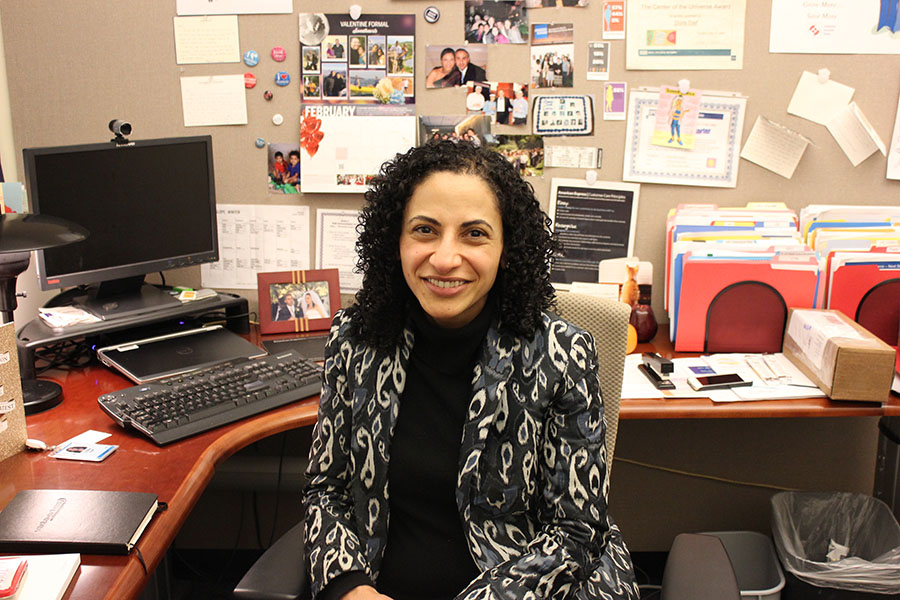
Deepa Subramaniam, the Director of Product at charity:water, is always looking for ways to push herself both personally and professionally. When Deepa is not building awesome products with impact at charity:water, she makes time to meditate, do yoga, attend tech meetups, and set daily goals for herself. After taking a computer science class at U.C. Berkeley, Deepa discovered her natural passion and made a career out of it by working at Adobe and moving up the ranks. However, despite growing up, going to school, and working in California, Deepa recognized that it was time for a change and moved to New York City for an entirely new adventure in the non-profit world. Determined to continually challenge herself and live a full life, Deepa is incredibly inspiring and is living proof that you can wear many hats, be hardworking, stay involved in the community, remain curious, and in an effort to grow as a person, leave your comfort zone and embrace the unexpected.

Name: Deepa Subramaniam
Age: 31
Education: Bachelor of Applied Science in Computer Science from U.C. Berkeley
Follow: Twitter / charity:water

Carpe Juvenis: How do you define ‘Seizing Your Youth’?

Deepa Subramaniam: I think youth is subjective. I have met people who are the most youthful, joyous 60-year-olds and I have met 18-year-olds who feel as hardened and put upon by life as older people. Youth is what is in your heart, not your age – it’s how you feel.

I think it’s so weird when people are embarrassed about their age, it’s just a number. There are people who look 20 and are actually 40. I think age-based shame is a bad thing in our culture, and something we all should help nix. I remember being super excited about turning 30. I was really proud of what I had accomplished by 30 and I am excited about the next 30 years.

Seizing your youth is taking advantage of every single day that you have available to you. Make the most out of the time that you have. Just do and create and put things out in the world. Don’t worry about whether it is finished or polished and what other people are going to think. Live a fulfilling life and take advantage of your youth. I look back on times when I wasn’t learning or doing or creating, and that is a real bummer.

CJ: You majored in Computer Science at U.C. Berkeley. How did you determine what to study?

DS: I started school undeclared though a lot of people thought I would be a lawyer. I was good at science and math, but I wasn’t sure if that was what I wanted to do with my entire life. When I went to school, I realized that science was where my natural skill and interests lay. I had no idea about computer science at all. My sister studied computer science and she kept telling me to take a CS class. I shunned that for whatever reason – sometimes being told what to do by a family member is the best way to not do something.

So I started off studying physics. And I found astronomy really interesting. I finally gave in to my sister’s advice and took an introductory computer science class. It was so fun that it didn’t even feel like school! There was a lot of problem-solving and my brain was able to solve these programming puzzles without it feeling like a lot of effort. I guess that’s natural passion, and it was the first time I ever experienced that. This was late in my second year, but I decided to switch majors because I felt like that was the right thing to do. It took me four and a half years to graduate.

CJ: What made you interested in studying engineering?

DS: I like the problem-solving aspect of it. I was interested in how to make things better, how things work, and analyzing the natural friction point in systems. Computer programming was really fun and it didn’t seem like hard work so that was the best engineering pursuit for me. I thought that it would be amazing if I could make a life out of it. I read something recently about Jerry Seinfeld where he said he chose comedy because it seemed like the farthest thing from work for him. Problem solving through programming or technology is like that for me.

CJ: What does it mean to be an engineer?

DS: Engineering is so broad, there are so many different applications of it. I think engineering and being an engineer is about making systems better, whether the system is an airplane, a building, or a software program. Taking the time to understand and propose the right changes to make to a system – that’s engineering.

CJ: You recently moved to New York City from San Francisco to be the Director of Product at charity:water. What has your experiencing moving to the East Coast been like?

DS: I was born and raised in California, went to school there and I worked there for a very long time. I’ve basically always been at minimum, an hour away from family, friends, and parents. Moving to the East Coast was an intentional decision in order to challenge myself to see if I could thrive away from them. It’s a weird thing to admit in your thirties, but that’s just the case. I wanted a personal challenge and I wanted to try being in a new city with a new job in a new domain. I thought I was getting too soft and too comfortable in San Francisco so I wanted to change it up and rely on my inner hustle.

Also, New York is so inspiring right now for anyone interested in design, technology, or creativity. I think what’s happening in New York at this time is what the people a generation before me experienced in Silicon Valley. The energy around New York’s tech & creative communities is addictive and truly energizing.

CJ: What does your job as Director of Product at charity:water entail?

DS: Product is such a broad term. I work closely with our amazing creative and engineering teams to build out products so that it is the best experience for our supporters. As Director of Product, I help road map and improve products in our portfolio so we can raise more money and help provide more people with clean and safe drinking water. With the right products, we can connect money easier to the field so that we are building and sustaining more water projects for longer and ultimately giving more clean water to more people.

Right now I focus on what we can do online, such as our donation flow, our fundraising platform, and the educational components of our website. By having people learn and understand the water crisis, we want to inspire them to act, whether that’s through giving money, fundraising, or just spreading the word about the water crisis.

As a product manager, I analyze data to figure out where our customers are successful and where they are not and how our products should grow. My job synthesizes different aspects of the business from engineering to creative to data analysis.

CJ: You used to work at Adobe. What skills did you bring from Adobe to charity:water?

DS: I was at Adobe for a long time. I was a lead engineer and then switched over to technical product management. I definitely think people should work multiple jobs and work a variety of jobs in their lifetime. Going from a large, corporate company to a small, non-profit has been really interesting. At Adobe, I learned about working in large teams, how to clearly define what the goals and key initiatives are, how to report back to people, and how to ask for what you need to be successful in ways that are going to be met with action.

The people I worked with at Adobe are a very mature group, so I grew up in a business environment but also had a lot of fun. I learned about quality software development, mixing quantitative and qualitative skills, and how to use data to improve products. Because of my time at Adobe, I came to charity:water with a solid foundation and confidence so that was definitely a good transition.

CJ: What do you love most about working at charity:water?

DS: It’s so meaningful day in and day out. The people I work with and the work that we’re doing is incredibly inspiring. There are so many creative, smart young people who could be working elsewhere but chose every day to work at charity: water. We are all here working on something that will hopefully outlast all of us. That passion and commitment is rare, and to see that among a group of 50 people is fascinating.

CJ: What does a day in your life look like?

DS: I’m up pretty early. I like to stretch and try to do a little meditation, 8-10 minutes per day. It helps me find balance and composure in a busy day. I come into work and then the busy day begins. I meet with my team, discuss on-going projects and get a sense of what is most important to accomplish that day. This is a habit I have formed, where I jot down 5 things I want to accomplish that day – both personally and professionally – and anything beyond that is cake. I power through things based on that list and work tends to fly by.

I tend to do many more things with my day in New York than in San Francisco. I’ll go to a design or tech talk, meet friends for dinner, or go to yoga, and then try to get home at a decent time so I can get more sleep. As I’ve gotten older, I have become more dogmatic about self-care. When I was younger, exercise, eating well, and quality alone time was not as high on my list.

To achieve long-term goals, you need the discipline of being able to achieve wins in much smaller increments. So I rely on daily rituals and weekly rituals to keep me focused. If you’re consistent about accomplishing those rituals and are defending them from change or competing priorities, that cadence and discipline will translate to hitting year-long goals. Be critical about what goes on your daily list of things to accomplish. If something isn’t a “hell yeah” I want to do this, then it doesn’t go on the list. I am more careful about the time and energy that I put into something and that means I am ultimately happier with the outcome of my days.

CJ: What is the best moment of your career so far?

DS: So many, I feel blessed. I have just worked with so many great people. One of the things I am most proud of is when my co-workers and I had an idea about a new tool and we pitched the idea to Adobe executives. I convinced them that there was a real need and opportunity and that I was the right person to run it from an engineering and technical perspective. I built a team of engineers and then most of our managers forgot about us till we debuted the tool at our annual user conference. We sneaked the tool and it was met with such excitement and ended up having a great release. That is where I learned that with a little space, a team, and a high dose of passion, we could take something from idea to execution quickly.

That tool, by the way, is called Adobe Scout.

CJ: What advice would you give teenagers or young adults who are interested in being engineers?

DS: There are so many ways to learn about design and technology. You can buy a book, take a class, or just jump in and start playing. The barrier to entry is a lot lower.

Even if you have a tiny bit of interest in programming or design - just try and learn it. A quick Google search will help you find those resources or a local meet up to learn with other people in a social environment. If that hunger comes from within instead of having to create it, then you’re on the path to working on something with passion.

CJ: Did you face any adversities in the workplace or school for being a woman in a predominantly male profession?

DS: There have been situations where something has happened which made me feel weird. Things that I shrugged off in my twenties are things that I would challenge now. For the most part, though, I have been surrounded by amazing people, both male and female. I always intentionally sought out great people to be around, both in school and work. Here’s one bit of advice: don’t wait for someone to ask you if you need a mentor. Go up to people you admire and ask to them to mentor you – you’ll be surprised how often people say yes.

CJ: You are a South Indian Classical dancer. How long have you been involved with dancing and how has it impacted your life?

DS: I still dance and have started choreographing a bit more. I have been dancing since I was six-years-old. Having a creative and artistic outlet has been incredibly important for me. Dance is so great, it teaches you composure, it’s physically great exercise, and it is a great mixture of expression and movement. There are so many amazing dance communities in New York - I love it. I would not be the person I am today without having a creative outlet that I love, which for me was dance. It is a great way to play when you’re not working on your other passions.

CJ: What motivates you in your everyday life?

DS: I don’t like to do the same thing, I like to do a bunch of different things, such as write a book, do a dance show, ship a great product, etc. Learning new things is how I define growing, and growing is what motivates me. I want to squeeze as much as I can out of every day!

CJ: What advice would you give your 20-year-old self?

DS: I would tell myself that it’s okay to break some rules and not do the things that you think you are expected to do. Do things that you think are expected of you only if they are in alignment with who you are and what your core values are. So I guess I would tell myself to rock the boat a bit more.

Another bit of advice is that you don’t learn nor do you get better without making mistakes. I still make mistakes every day, and that’s a good sign. In the moment it might feel uncomfortable, but I look back on it and realize that those moments translated to real growth. Force yourself to make mistakes when you’re younger because the bandwidth to recover is so much higher.