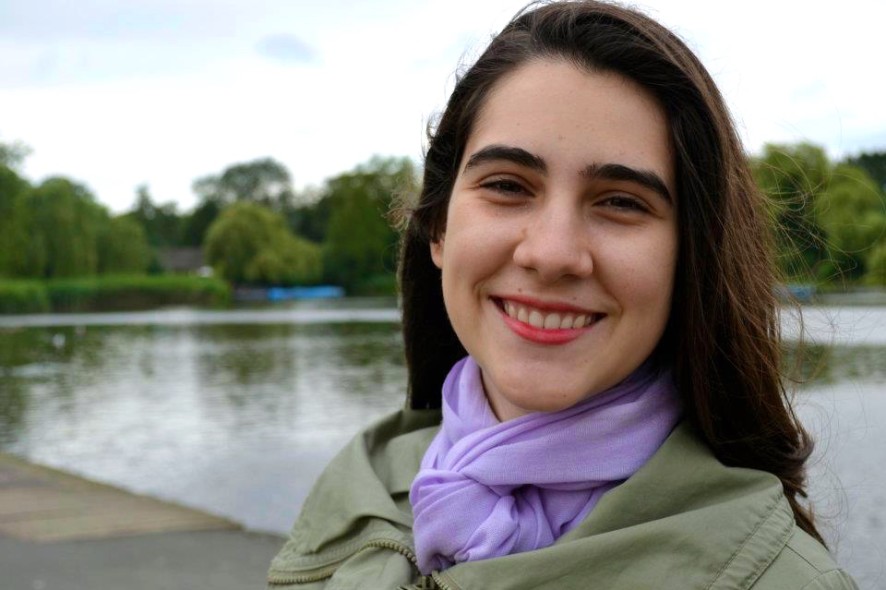
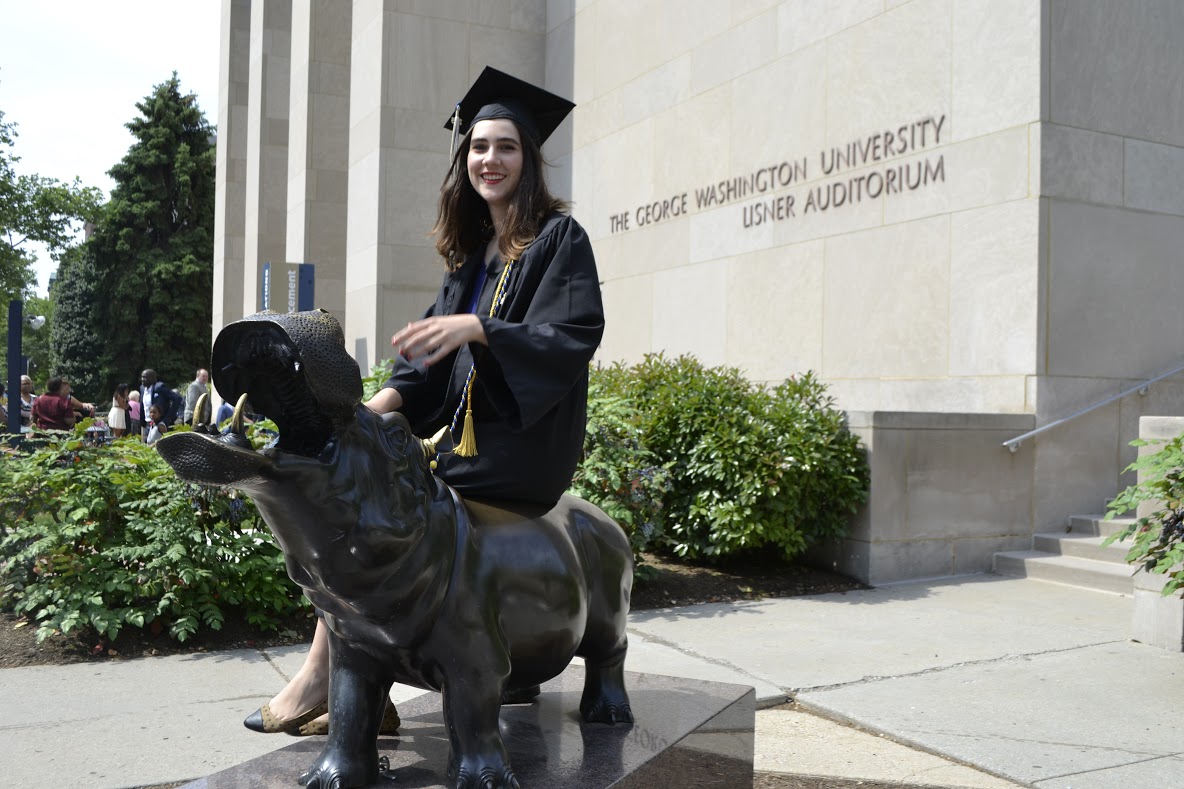
Ana Cvetković is a recent graduate of the George Washington University where she studied Journalism and Mass Communications. Having been surrounded by journalism while growing up, it was only natural that Ana would pursue it in her studies and career. Originally from Belgrade in Serbia, Ana’s stateside home is now the east coast. Ana is also the founder of the beloved food blog, Better Than Ramen, where she blogs about her visits to restaurants around the world. Furthermore, Ana has gotten into cooking recently, and she documents the food she cooks and enjoys.
A little fun fact about Ana: she is profiled in our book, Youth’s Highest Honor. Ana shares her motivations for earning the Congressional Award and what she did to earn her Gold Medal from Congress.
Read on to learn more about what qualities Ana thinks makes a strong intern, what putting a blog post together looks like, and how she defines seizing her youth.
Name: Ana Cvetković
Education: Journalism and Mass Communications at the George Washington University’s School of Media and Public Affairs
Follow: Better Than Ramen / @betterthanramen / Facebook / LinkedIn
Carpe Juvenis: How do you define “Seizing Your Youth”?
Ana Cvetković: Seizing Your Youth is about taking advantage of opportunities that are given to you. It’s about saying yes to those opportunities and giving them a shot to figure out whether or not they are right for you. When you are young, people are more willing to help you out, so you should take advantage of that opportunity. Seizing Your Youth is also about making opportunities for yourself. I started my food blog, Better Than Ramen, because I knew I could write about food well without doing it for someone else’s blog or organization.
CJ: You studied journalism and communications in college. What led you to those academic passions and why did you choose to study them in a formal setting?
AC: I’ve always been surrounded by journalism. Growing up in Belgrade, I would see my grandmother read Politika, Serbia’s newspaper of record, every day. When I moved to America, I fell in love with American Girl magazine. I remember the first issue I read was February 2000 and it had these ideas for throwing a slumber party and I thought they were so much fun. The magazine tapped into my creative side. As I grew older, I began subscribing to magazines. Whenever an issue would come to my mailbox, I tried my hardest to make it last me the whole month. So it was my love of reading magazines that made me consider a career in journalism. While I still love writing, my coursework at George Washington University and internships with the Federal Reserve Board of Governors and the Smithsonian have made me fall in love with video production.
CJ: What cause or issue do you care greatly about and why?
AC: While it’s neither a cause nor an issue, I believe that everyone should travel the world. Many people have shallow worldviews because they don’t know what else is out there so they think their way of life is the best. I was born in Belgrade, Serbia and moved to the US when I was very young. I grew up speaking Serbian and spending my summers in Belgrade. Besides having two passports, I feel like I have a dual identity. When I’m in the U.S., I notice how my Serbian values and traditions differentiate me from my peers. When I’m in Serbia, I feel American because I don’t quite fit in there either. I have a unique perspective because of my dual identity and travels. I’m not saying that the solution to all of the world’s problems can be solved through travel, but connecting with people of different nationalities, races, and cultures can remind us that we are all human.
CJ: You earned the Congressional Award Gold Medal in 2013. How did you get involved with the Congressional Award and what was your biggest takeaway from the experience?
AC: My high school had a strong service-learning program. Many of my friends got involved with the Congressional Award and they said it would look good to colleges and help them get scholarships. My high school’s service learning coordinator, Mary Rodgers, helped me get started and served as my mentor throughout my journey. My biggest takeaway from participating in the Congressional Award experience is that I can achieve my biggest goals with the help of organization, patience and persistence. It made me more disciplined.
CJ: You write your own food blog called “Better Than Ramen.” What prompted you to create that website and what has been the greatest part about blogging so far?
AC: I think all great ventures begin out of boredom. A few months before I launched the blog, and at the end of my freshman year at GWU, I was having lunch over the summer with two friends who were just heading off to college. One of them was going to school in Boston, another in Philadelphia and I was already attending school in Washington. We were at a Middle Eastern restaurant and we were all taking pictures of our food - this was way before the days of Instagram. I thought it would be cool to document our dining adventures in these three great cities, so I set up the blog, but months passed and we never did anything with it. A few months later, I went out to brunch with a bunch of friends on New Year’s Day while I was home for winter break. The next day I felt bored, as most college students probably do when they are home for a break. Inspired by the brunch, I decided to revisit my blog idea. I wrote my first post and the rest is history.
I had started several blogs in the past, but they never lasted long because they didn’t have a theme. I knew I could keep up a food blog because I have to eat, so whether it’s a meal at a restaurant or something I whipped up at home, I would always have something to write about.
The greatest part of blogging is having people tell me that they love reading my blog (or even that they’ve heard of it!). Part of the reason I gave up on past blogs was because I felt like no one was reading them. BTR is like an online diary for me because I have so many memories associated with the meals I’ve had. However, the blog is still written as a guide with practical information, so it’s thrilling when I hear that people have gone to a restaurant that I’ve suggested. It’s rewarding and empowering knowing that I’ve influenced someone.

CJ: You are passionate about writing and sharing information about food with your BTR audience. What is the process of creating a post and how much time is required?
AC: The process is pretty quick at the restaurant. When the meals come to the table, my friends or boyfriend or whomever I’m dining with know to not touch their meals until I’ve snapped a picture (thanks for putting up with me!). I’ll usually ask my friends for a bite or two of their dishes, or for them to describe their meals. Then I take notes of my impressions or their thoughts on the Notes app on my phone. I try to be as unobtrusive as possible when I’m eating out with a group of friends, but they’re gracious and are used to my picture taking at this point.
When I go to write a post, it could take anywhere from an hour to a few days, depending on how excited I was about the meal. I typically take photos with my phone, which isn’t great in low lighting situations, so I spend time touching up the photos so that the lighting quality doesn’t distract from the post. Then I write my review, do some research on the restaurant, and insert the photos. After that, I create social media posts for the new article to make sure it gets to as many readers as possible.
CJ: You spent your senior year at GW interning for the Office of Communications and Public Affairs at Smithsonian Institution. What are your top three tips for being a strong intern?
AC: 1) Have a specialty. At the Smithsonian, I produced, filmed, and edited videos for the Seriously Amazing marketing campaign. I was the office expert when it came to using our cameras and video editing software because I’ve used them in class and my past internships. My colleagues had tons of experience in other areas of public affairs that I didn’t know much about, but I was an important part of the team because I had expertise in an area that others didn’t know as well.
2) Always ask for more work. Show that you’re eager by taking on extra assignments. An internship is really what you make it, so if you’re okay with just doing the bare minimum, you won’t impress anyone and you won’t learn all that you can. Do as much as you can to learn what you enjoy doing.
3) Learn from your co-workers. Asking your co-workers about what they do and how they got there flatters them and gives you insight into career options in your field. This is especially useful if you don’t know exactly what you want to do. Your colleagues could also put you in touch with other people they know at places you may want to work.

CJ: Every day in your life must be different depending on work and the time of year, but what does a Monday look like for you?
AC: My Mondays are atypical right now because I just graduated and am looking for a job, so I’ll describe my typical Monday during my last semester at GWU. I only had one class on Mondays, so I was one of the lucky few who didn’t have to wake up to an alarm that day. I’d sleep until I was well rested, make myself breakfast, then go to my American Architecture lecture. I was out at 2 p.m. so I was free to do as I pleased if I’d taken care of my schoolwork.
I’ve really taken advantage of living in DC by thoroughly exploring the city. I minored in art history, so one of my favorite spots to spend time in is the National Gallery. It’s less touristy than the Smithsonians, so you can easily occupy one of the comfy couches they have in each gallery and read, study, or sketch for a few quiet hours while taking in masterpieces by Rubens or Fragonard.

CJ: What is an area, either personal or professional, that you are working to improve in and how?
AC: I’m always looking for new ways to improve Better Than Ramen. Now that I’ve graduated from college and am on the job hunt, I have a little more time to dedicate to growing the site. I’m looking into forming partnerships with brands and local businesses to create exciting new content. I’m also hoping to introduce videos to the site because I have the skillset to do so and because multimedia storytelling would add another dimension to my writing.
CJ: Having a loaded schedule can sometimes be overwhelming. What do you do when you’re having a bad day and need to unwind or reset?
AC: If I’m drained and stressed out, I unwind with a cup of tea and Netflix. House Hunters International is my guilty pleasure because I was born in Belgrade, Serbia and have traveled a lot so I love seeing how people live around the world. If I’m dealing with a stressful situation I need to talk it out, so I’ll call my family or my boyfriend to work through the problem.
CJ: What advice would you give your 15-year-old self?
AC: When senior year of high school comes around, don’t take AP Physics. You don’t need to take the most difficult class your school offers, especially because physics has absolutely nothing to do with your college major! In high school we are taught to take everything so seriously and that everything will look good or bad to colleges, which will then look good or bad to employers. Stay focused, but don’t take everything so seriously!

Images by Ana Cvetković