CultureTravel

I saw the stars in New Zealand. The kind of stars you read about, but have never really seen living in a metropolis your whole life. Swirling white, blues, and purples of the Milky Way looked just like what old middle school science textbooks showed. After gazing up at the stars out of the small car window in silence for nearly 10 minutes, my new house-dad said to me in his soft New Zealand accent, “Are you tired?”

“No,” I said, “I’ve just never seen stars like this in my entire life.”

aysiakiwifamily3

I went on to describe that where I was from in the United States, the lights from the developed area makes it hard to see the sky in such glorious detail. From this, we began to chat about air pollution, environmental issues, and a bunch of other random topics. Moments of bonding between such different cultures, like this one, were characteristic of the unforgettable three days I spent living with a Kiwi family in Te Awamutu, New Zealand.

In high school, I traveled throughout the South Pacific for nearly a month with an organization now called called People to People Student Travel. In New Zealand, each of us were set up to stay with a family for a few days to learn about the country from a new, more authentic perspective. I stayed with the lovely Awhimai family—made up of a teenage daughter, Shaani, her older sister Jo and her two small children, and their parents. They were a Maori family, meaning they are descent of indigenous New Zealanders, and referred to themselves as “Kiwi.” Their quaint, pink house was situated on a small farm with a few cows and chickens.

aysiakiwifamily2

The three days I spent with them were challenging at times (it was winter and the house had no heat… cue endless shivering), but also extremely rewarding as I gained insight into New Zealand living, culture, and politics that I would have never learned elsewhere. Surely I could write for pages about everything that happened during my homestay, but I’ll boil down a few takeaway points from my whirlwind experience:

  • I didn’t know the real meaning of “farm to table” until I realized my favorite chicken with the brightest feathers went missing one day. Many New Zealanders raise their own animals and grow their own produce, a process that makes eating feel much more intimate… but also delicious.
  • The Kiwi people value old traditions. One day, I had the opportunity to go with the Awhimais to their family’s wharenui, a meeting house where ceremonies from gatherings to weddings to parties occur. There was signing, dancing, and an obvious passion for keeping old Kiwi practices alive. Shaani told me that “it was all they had that was truly theirs.”
  • New Zealand, like many other nations, is also troubled with tension between native people and the majority. It was interesting for me, as a young black woman, to draw parallels between the struggles of Kiwi people and minorities in the United States. Even across oceans, we are more alike than we are different.

The time I spent and conversations I had during my homestay were simply priceless. I was proud of myself for going into it with an open mind, and more importantly, and open heart ready to absorb all it could. So, thank you again Awhimai family and thank you New Zealand! Hopefully, I’ll see you both soon.

aysiafiji4
CultureHealthTravel

With its long days, relaxing energy, and laid-back natives, I can only describe the small island nation of Fiji as slow. When I traveled to this beautiful country a few years ago, the friendly Fijian workers at the resort I stayed at taught me so much. Not only did they teach me about some of the local flora & fauna of the ocean and how to properly drink kava (more on this later!), but they also taught me about a concept they call “Fjii time.” According to the natives, Fiji time is a sensation felt by everyone who visits and lives on the island – Fiji time makes minutes feel like hours and hours feel like days. It forces people to stop rushing and enjoy where they are at the moment.

Coming from a fast-paced lifestyle, getting used to Fiji time was an adjustment. If I am being honest, I found it a bit annoying at first. The same way some American east-coasters say that the west coast is too “laid back” for them, I thought Fiji was just a sleepy island that essentially was a giant resort for retirees and ex-pats. Soon enough, I was proven wrong.

One spontaneous night, the resort staff invited me and few friends to join them up at the main building. We joined them and saw about 6 or 7 Fijians sitting Indian-style on the floor and laying shamelessly across the cold tile floor (maybe in attempt to cool off from the heavy Fijian heat). We spent what seemed like hours chatting about Fijian culture and talking about the adventures many tourists – including myself – had been on so far. From values to fears to funny stories, we talked about it all. At some point in this conversation, I remember thinking, “so this is what they mean by Fiji time.” No one was worried about going to bed at a certain time or counting the hours until we had to wake up the next morning. We were all simply enjoying each passing second in the present moment.

Quick side note: throughout the conversation, the staff was sipping on a drink called kava, a traditional beverage with some serious sedative properties. Naïve to what exactly kava was, I tried some and quickly noticed my tongue was tingling and I felt very calm. I briefly wondered if “Fiji time” was a result of drinking kava, as it is a popular pastime for Fijians, but then dismissed it because I surely experienced Fiji time beforehand… we will never know for sure.

At this point we have probably all read enough self-help articles helpfully urging us to slow down our hectic lives, but I want to add to this. So much can be learned when you spend time with those of another culture, background, or ideology. While the idea of Fiji time originated in that island country, it is a mindset that can be taken with you anywhere across the globe you might find yourself.

Fijians value spending their time together laughing, storytelling, and giving advice – something that does not seem to happen as often in person as it should. What I took away from Fiji was more than lovely photos and a few souvenirs, but a reminder of how important it is to pass time – in the moment – with the people around you.

Image: Aysia Woods

Nicole 1
Professional SpotlightSpotlight

Saying that we are fans of Darling Magazine would be a major understatement. We are huge fans - we love how real it is, the topics covered, and the positivity expressed on each and every page. Did you know that Darling Magazine never uses Photoshop to alter women’s faces or bodies. Pretty cool. Not only is the magazine a joy to read, but the Darling website provides a dose of daily happiness and articles that are deeply relatable.

When you’re on the Darling website, Nicole Ziza Bauer is the one curating everything you see, such as writers, articles, ads, and collaborations. So you can thank her when you read an article that makes you reflect on what’s important in everyday life. Though Nicole now spends her time storytelling, her time used to be spent in labs and conducting medical research. Nicole originally pursued a career in the medical field, she stepped back and thought hard about what she wanted to do, not what she should do. This reflection brought her to a new, more creative path.

Nicole is a world traveler, an avid list-maker, and someone who is true to herself, and her journey will inspire you to follow your heart and to not worry if you don’t have everything already figured out (who really does anyway?).

Name: Nicole Ziza Bauer
Education: B.A. in Zoology and Molecular Biology from Miami University
Follow: NicoleZizaBauer.com / Darling Magazine

Carpe Juvenis: How do you define ‘Seizing Your Youth’?

Nicole Ziza Bauer: Enjoying it, savoring it, not being in a rush to grow out of it.

CJ: You majored in Zoology and Molecular Biology at Miami University. How did you decide what to study?

NZB: I planned on going to medical school after graduation, so I wanted to major in something that would best prepare me for what lay ahead.

CJ: After college you were a Staff Research Associate at UCLA Medical Center researching how the heart works. What was this experience like working in a lab and conducting research?

NZB: Working in the lab was a great transition from college life to the “real” world, since I was still in an academic environment very similar to where I had spent the last four years. It was challenging but also inspiring; I got to be on the very edge of research that could potentially save lives. Though there was a lot of monotony and repetition in the lab, each day also held the potential of unlocking something that nobody had ever seen or understood before. That was really motivating.

CJ: After preparing for medical school and doing post-grad research, you switched career paths and went into a career of storytelling, writing, and creating. Before Darling Magazine, you were a Purchasing Agent and Event Coordinator. What inspired this change of heart and how did you deal with the stress of making this transition?

NZB: I wish I could say it was one simple thing that sparked the change, but nothing in life is ever that black or white. While I was excited about medical school and worked really hard to get accepted into one, I also kept a strong inner dialogue after college and that prompted me to truly evaluate where I saw my life headed and if there were other things I might want to do instead of becoming a physician.

I had always been a creative child and writing and art brought me a lot of joy. When I stepped back from what I thought I “should” do in order to appear successful in the eyes of others and slowly started asking myself what I wanted to do, the answer came into focus. From there I started looking for opportunities that would better enable me to learn and grow creatively.

Nicole and Horse

CJ: How were you able to block out the external voices and follow your internal compass?

NZB: Trusting that I didn’t have to have it all figured out, or have a clear idea of my career path once I graduated helped to free me from the stress surrounding the decision. I had to (and still do) remind myself that taking things one step at a time is OK. Our character and appreciation of life is built in those tiny steps. Thankfully, I had a few close friends that I could lean on when I was deciding whether or not to go medical school who guided me out of the fog a bit. Having those trusted sources to remind you of your worth, your convictions and your big dreams is so, so important.

CJ: What advice would you give a young adult who might be at a “passion crossroads” in his or her life?

NZB: I would say: Hi, can I give you a hug? Because you are completely normal!

College is great for so many things, but a lot of times it can also lead us into a false belief that it’s the only time in life to figure things out or decide our future. That’s simply not true. If you are conflicted over what you’re pursuing right now, ask yourself some tough questions: Why did you choose the road you’re on in the first place? Whose applause are you seeking? Do you want out because you’re afraid of hard (sometimes tedious) work? Or are you simply realizing that there might be other avenues out there that you’d enjoy and want to explore?

Our early to mid-20s grant us many opportunities for making decisions and learning how to make independent choices. It’s really important that we look at crossroads or changes of heart not as failures, but as chances to better understand how we’ve been made, who we are, and what our unique role in the world should be.

CJ: You are now the Online Managing Editor at Darling Magazine, a guide to “the art of being a woman.” What does your role as Online Managing Editor entail? What do your daily tasks look like?

NZB: As online editor I’m responsible for all the website, blog, and advertising content that Darling develops. This involves creating and maintaining an editorial calendar (so that our site always has new material), finding and communicating with writers, and generating article ideas, and sometimes even writing myself. My daily tasks include lots of emails, reading and editing articles, chatting with different Darling staffers, and maybe a meeting or a phone call with a brand about potential collaborations.

Nicole ZB

CJ: You curate content, writers, ads, and collaborations on the Darling website. How do you go about narrowing down content so it fits the Darling mission, and how do you establish collaborations?

NZB: Great question! Knowing what you stand for is key to developing a powerful brand. Therefore, with Darling I’m constantly evaluating if something will serve to reinforce our mission statement or if it’ll conflict with it. I try to put myself in the position of a reader and ask: What would they take away from this article? Would they be more inspired to own the things our mission statement says about them, or less? The same goes for working with other writers and brands. We have to be on the same page, working together for that same common goal, rather than just using one another for increased status or popularity.

CJ: We loved your inspiring article ‘The Myths of Wanderlust’ – how has traveling influenced you, and is there a particular trip you have taken that stands out in your mind?

NZB: Thank you! Traveling is definitely something that I choose to prioritize, as it helps to keep my problems small and sense of wonder and world awareness large.

Probably my favorite adventure to date was the month I spent backpacking around Italy with my husband. My grandmother was Sicilian, so I’ve loved everything Italy since childhood. I studied the language a bit in college and then spent a few weeks in Rome after graduating, but getting to go off the grid around the entire country (for a whole month) felt like a dream. It was like coming home.

Darling Mag

CJ: How do you stay organized and manage your time?

NZB: I am an avid list-maker. Every thought, idea, or task that I need to accomplish gets written down, that way I immediately get it out of my head and onto a tangible piece of paper. From there, I look at my week’s agenda and decide when I can schedule time to complete the most pressing tasks. I never go anywhere without my giant, spiral-bound notebook calendar.

CJ: When you are feeling overwhelmed or having a bad day, how do you like to unwind or reset?

NZB: It depends. Sometimes I just need to say a quick prayer, vent to my husband or call my best friend. Other times getting outside and taking my dogs on a walk or going for a hike will help. And when all else fails … I’ll watch old Netflix episodes of Murder, She Wrote. JB Fletcher can solve anything.

CJ: Is there a cause or issue that you care greatly about? If so, why?

NZB: I love animals, so I’m a huge advocate of pet adoption. Not only can we provide an animal with a safe and loving home, but we in turn learn compassion when we care for things smaller and less consequential than us. Darling also has a partnership with IJM, of which I am a huge fan. They have such a comprehensive model for bringing justice and eradicating sex trafficking across the globe. It’s very impressive and inspiring.

CJ: What are you working to improve upon – either personally or professionally – and how are you doing so?

NZB: Lately I’ve been trying to get by with less, get rid of more, and curb the mindless spending that’s all too easy to fall into, especially after trolling blogs or social media. In the last few months I’ve donated about five bags of clothing, which has been really eye-opening to consider, especially when I find myself “needing” something new. Most likely, I don’t.

CJ: What is your favorite book?

NZB: The Count of Monte Cristo by Alexandre Dumas.

CJ: What advice would you give your 20-year-old self?

NZB: Study abroad. Also, take a deep breath; this is just the beginning.

Nicole ZB Qs


Images by Emily Blake and Nicole Ziza Bauer

ExploreTravel

When most people think of the top “foodie cities,” New York, Nashville, or New Orleans likely come to mind. But I think there’s another city climbing its way up the culinary ladder – good old Washington, D.C.! That’s right, the city I call home has quite a few restaurants that my taste buds just can’t get enough of. Next time you’re ready for a mind-blowing meal, try one of my favorite D.C. spots.

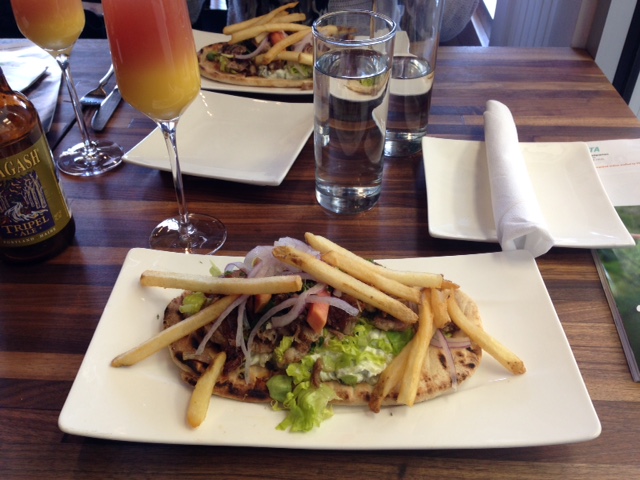
Located in the charming, Eastern Market neighborhood, Sona Creamery & Wine Bar is the place to go for a satisfying meal or a quick gourmet snack. This restaurant is known for its wide variety of decadent cheeses (they even make their own in-house) and perfectly paired wines. I recently went here for brunch with a group of my closest friends for my 22nd birthday, and we each ordered an entrée and split the most delicious five cheese board imaginable. The cheese made me seriously consider signing up for Sona’s weeklong Cheese Tour in Ireland – yes you read that right, cheese tour in Ireland. If you find yourself here, I recommend the Lemon Ricotta Pancakes or Pork Gyro. You can’t go wrong with either.

Processed with VSCOcam with c1 preset

I just moved to D.C.’s Van Ness area, so I have been doing quite a bit of exploring. During my strolling, I came across Bread Furst Bakery. This quaint neighborhood bakery serves all kinds of pastries, breads, breakfast foods, pies, cakes, jams, preserves, and so much more. The relaxing patio out front is constantly full of families enjoying the weather, joggers taking a quick break, and dogs relaxing in the shade. Bread Furst is a must-do not only for the nice atmosphere, but also because of its Lavender Honey Tea Cakes and those perfectly soft chocolate cookies. Sometimes, you just have to thank serendipity for discovering gems like this.

aysiafood1

For the more adventurous eaters, here is the restaurant for you – Das Ethiopian Cuisine, nestled in the heart of Georgetown. First, a quick disclaimer: wearing stretchy pants here might be a good idea. This classy establishment serves all types of flavorful fish, meats, and vegetables customary of Ethiopian cooking. I usually go for the Das Chicken and Beef Combination Sampler because, like its name suggests, it has a little bit of everything. The staff is forever accommodating and it is obvious just how much pride they take in the restaurant, as all the white tablecloths are impeccably pressed and napkins expertly folded. Eating with your hands is expected here, which makes dining even more of an experience.

aysiafood3

Finally, located in the up and coming D.C. neighborhood of Bloomingdale is Old Engine 12 Restaurant, a new spot serving creative versions of traditional American dishes like Deviled Eggs with shrimp and squid ink or grits with heaps of extra sharp Cheddar. I first went here when my parents came to visit me and we were impressed with the neat architecture. The restaurant is actually a renovated firehouse and its integrity has been maintained with the industrial fireman poles and open garage doors. Not only was I fascinated by the unique dishware at Old Engine 12 (clear mugs make tea much cooler) but I was also happily satisfied with the homemade grilled meatballs and beet salad – it all felt like real comfort food.

Next time you want a food adventure, try one of these restaurants! I would love to know how you like it. Happy eating!


Travel

There are endless ways to explore the world: solo, with family, as a volunteer, or with a program. No doubt each method offers its own unique perks and setbacks. Having the opportunity to travel more independently with family and friends and with larger organizations like People to People Student Ambassadors and Global Visions International (GVI), I’ve experienced a bit of what these various types of travel have to offer. If you’re considering signing-up with a traveling program, hopefully this little list of pros and cons of traveling in large groups will help you make your decision!

Pros

  1. Meeting people from all over the world is ten times easier in an organized setting. When you think about it, everyone is likely there for the same purpose – to gain invaluable experience in a foreign location and build relationships – so you already have something in common! Many times programs have semi-organized free time or group activities that promote casual socializing. Afterwards you will hopefully have great friends to visit (and who will let you crash on their couches) in other countries!
  1. Access to special deals, promotions, and events are common perks as organizations usually have deals with popular tourist sites and great relationships with the local community. I’m talking private tours, discounted tickets, and behind-the-scenes information that you would never have known about had you traveled independently. When I went on a three week South Pacific tour with People to People the summer of 2011, all of us students had a chance to meet the mayor of Rotorua, New Zealand, and enjoyed a night dancing our hearts out on a boat overlooking the Sydney Opera House. Could we have done this on our own? Maybe, but definitely not for free like we did!
  1. You’re going to learn so much. Most large travel organizations have a platform, activity, or issue they are addressing through their program – it could be education, sports, poverty, hunger, health, politics, or cross-cultural understanding, just to name a few. The program I volunteered with through GVI was focused on education. Had I never participated, I would know nothing about injustices that exist in the South African primary school system. The entire experience opens eyes to issues you know little about or, like me, never knew existed.

Cons

  1. Early mornings are part of the packaged deal when traveling with a large group. Depending on the type of program you travel with, schedules vary slightly, but more than likely participants are required to follow a schedule that starts early in the morning. It’s not always terrible, but when jet lag combined with simple travel exhaustion are combined, waking up could be a struggle.
  1. Yes, there will be some people you don’t care for in your program. But the good news is, there are many other people to focus on and you will not be with them forever. You never know, after your travels you may even miss that one annoying personality.

There are so many positives than negatives that come from traveling with a larger group or organization. I dare you to give it a shot!

Image: Flickr

Meagan A
Professional SpotlightSpotlight

When we think of people who have inspired us, Meagan Morrison comes to mind for several reasons: she created her own dream job, she’s incredibly talented, and she’s contagiously optimistic. You can tell right away from seeing her illustrations how much skill Meagan has, and you immediately get drawn into her colorfully brushstroked world.

Though Meagan studied business in undergrad, it wasn’t until she was 24 that she decided to go back to school for a degree in fashion illustration. After doing internships and asking lots of questions, Meagan realized that she was going to have to create the dream job she ultimately wanted. The awesome and inspiring part? She did just that.

As a Traveling Fashion Illustrator, Meagan works with fashion designers and high profile brands and travels the world illustrating what inspires her. During our conversation, Meagan consistently referenced how much hard work it takes to make your dreams come true and that you have to “rewire your brain to think positively.” Very true words, and it’s encouraging to know that the road to your dreams may not be easy, but it’s definitely worth the challenge.

We’re excited to share with you Meagan’s interview with Carpe Juvenis! Read on to learn about her role as an illustrator, the greatest lessons she’s learned from starting her own company, and of course, how she seizes her youth.

Name: Meagan Morrison
Education: Bachelor of Commerce from McGill University; Fashion Illustration AAS from Fashion Institute of Technology
Follow: MeaganMorrison.com / Instagram / Twitter / Facebook

Carpe Juvenis: How do you define ‘Seizing Your Youth’?

Meagan Morrison: Making the most of every opportunity and asking tons of questions. Those who seek will find. Don’t wait for anything to fall into your lap, you have to go after it. Since I was very young I’d always ask a lot of questions to family friends and teachers. I was constantly educating myself and involving myself in things that I found interesting. ‘Seizing Your Youth’ is ultimately defined by each individual and what he or she wants to get out of life.

CJ: You received your Bachelor of Commerce from McGill University. What did you major in and how did you determine what to study?

MM: I went to McGill and studied business. My older sister went to McGill, as well. When I went to visit her, I remember looking at the girls in the commerce program and I loved seeing how they carried themselves. They were well dressed and professional. I really identified with them. They looked confident, empowered, and determined.

At the time I was very much into fine arts, but I wanted to step out of that for a bit to find myself and my purpose. I knew that with a foundation in business I could specialize and go smaller, but it would be harder to go from something narrower to a business degree. It felt like the right building block at the time.

Meagan D

CJ: You also received an Associate’s Degree in Fashion Illustration AAS from the Fashion Institute of Technology. What was that experience like?

MM: By the time I started my AAS in illustration I was 24 and really knew that the program was what I wanted to do. It was a highly specialized degree that offered fashion illustration as a two-year program. I didn’t want to commit to another undergrad degree, but I wanted a foot in the door in New York. I also wanted to be totally immersed in fashion illustration. I read this quote in a book about fashion illustration that advised to launch your career in a city that matters. I figured if I was educated here and given the opportunity to work here, I would be launching myself in the biggest city in the world for my industry. That’s what prompted my decision to go back to school.

Meagan Insta 3

CJ: What sparked your love of illustration and design?

MM: I always loved fashion and art. I didn’t quite know that they could co-exist so intimately until I started working in the fashion industry after McGill. My first internship was at a fashion magazine and I was constantly asking questions between the editorial department and the art department to see how much, if any, traditional art they used. It was predominantly graphic design and photography, so I didn’t see myself in that world. I thought maybe I belonged in the gallery world of fine art. Somewhere between trying out a bunch of different professions in the industry and asking questions, one of my coworkers mentioned the program in fashion illustration at FIT. When I heard the profession and researched it, it felt as though a lightbulb went off. I couldn’t believe that I found something that really combined my true greatest loves: art and fashion. That’s what really sparked the passion for me.

After hearing about the profession and the program at FIT, I went to bookstores and pulled all the sources I could find on fashion illustration. I searched through the glossaries and found names of illustrators, and some were located in Toronto. I reached out to Virginia Johnson, a local Toronto illustrator and textile designer, and brought her my portfolio. I explained to her that I loved illustrating shoes, and she pushed me to follow what I loved and told me that the rest would fall into place. I’ve been obsessed with illustration ever since.

Meagan Insta 2

CJ: You are a traveling fashion illustrator and recently branched out to start your own company. What does it mean to be a traveling fashion illustrator?

MM: It’s about being mobile and not just sitting at my desk pulling images off of the Internet. It’s about experiencing the culture firsthand and having that inspire my work. I have always been so passionate about travel and how that would inform my illustrations, and I wanted to be known as an illustrator at the intersection of both travel and fashion. There’s nothing like discovering a new destination and seeing how people dress in different cities around the world. I want to capture how the environment they’re surrounded by influences their style and my work. It’s the same thing when I’m at a fashion show and later do illustrations. I’ve seen the clothes, felt the texture of the fabric, heard the playlist, and felt the mood of the environment. I see the vision that the designer intends for the line. It helps bring the illustrations to life.

CJ: What are the greatest lessons you have learned from starting your own company?

MM: That you never stop fighting. Every paycheck is a fight. Every project is a new hurdle. I don’t mean to sound defeated by that, but it is the most obvious and striking contrast between working full-time and working for myself. I knew every two weeks I would get a paycheck at my last job, but now I have to chase and follow-up on everything. All the work of orchestrating that and keeping projects moving can be a challenge.

I’ve also learned that it would be great to have a sounding board. The thing I miss about working with a company is having the team to bounce ideas off of. It’s always a joint decision. I love the fact that I am making choices for myself and I do have the final say, but I think it’s good to discuss the decision with someone first and come to a well-informed decision. It’s a lot of pressure to not make the wrong choice on your own.

You also have to be careful so you don’t get taken advantage of. You’re constantly looking after yourself. The momentum has to keep going and the ball can’t drop. I find that the more I’m working, the more work comes in. It’s the ripple effect. The chain reaction in itself can be exhausting because when can you ever pause and catch up on your sleep?

CJ: You have done illustrations for amazing clients including Lucky Magazine, Rebecca Minkoff, Calvin Klein, and Conde Nast Traveler. When you work with each client, what is your process and your role as an illustrator?

MM: It honestly differs with every client, how big the project is and how much they want to involve the social and illustration aspects of it. When I come into a partnership I always gauge what the client’s expectations are, the breadth of the project, the timeline, their budget, and then we work from there. It’s about finding the middle ground between what you feel comfortable with and what the client feels comfortable with.

I have a clear vision about the brands I want to work with and how they align with the vision I have about being a traveling fashion illustrator. I don’t take on every project. If people want to sponsor things on my Instagram, I don’t take every product. Every partnership is very authentic. I don’t ever take on a job just for the money; I only do it when I believe it’s genuine and it makes sense.

Meagan C

CJ: How long does a piece take to create from start to finish?

MM: It varies per project and per client. For instance, my Calvin Klein job, I was at the show illustrating live. I could feel the fabrics and speak to the creative director, Francisco Costa, about his vision. I had about two days to turn around finals, but it helped to see the actual clothes. The pieces themselves takes me about three to four hours to complete, but that varies depending on how detailed each piece is. Then I scan the paintings, clean them up in Photoshop, and send the JPEGs to the client.

If it’s a customized piece or if I’m designing something from scratch, that requires a lot more preparation. I’ll do pencil sketches and color comps and then take it to the final round. Some are more laborious and expensive and others are just straight to final.

Meagan Insta

CJ: What should a teenager or young adult who wants to be a fashion illustrator do to set themselves up for success?

MM: Start asking questions and get a portfolio together. Also, don’t lose your voice. When people are younger they start to emulate the top people, but that’s not an advantage. People don’t want to hire a second rate version of someone else, they want to hire the first version of you. I’ve seen it on social media where people’s styles are so different, and that’s what’s standing out. It’s a saturated market. Keep true to you and keep your voice and style genuine. Embrace the quirks about your style.

There are tons of free websites out there as well where you can put your work online. Keep it clean and simple so you can showcase your work. When I was younger I was constantly illustrating to keep perfecting my craft and finding my voice. I wasn’t thinking about gaining clients just yet. Build your social awareness and share your journey. Then, when you are ready to work with clients, people will already know about you.

Meagan Insta 4

CJ: How do you stay organized and manage your time?

MM: I have a massive planner that is 8½ x 11 inches. I write lists every single day, and everything that doesn’t get accomplished the day before gets carried over to the next day. It’s blinding because I highlight everything. I also use whiteout so there’s nothing unnecessary on it. I start and end my day with that book.

From the planner I move to emails. The luxury of working for myself is that I can answer them when I’m in still in my pajamas. I get breakfast and then do errands. I want to get all my errands finished before I start painting, because once I start painting I lose track of time. It’s nice to have everything else taken care of so I feel at ease when painting. I don’t want stress to show through in the work. I often work pretty late into the evenings. It depends on how intense the turnaround time is. I like to end the day seeing a friend or unwinding watching Netflix.

One thing I’d like to do more of is exercise. You have to take care of yourself when running your own business. If you run yourself down there is no business. I don’t have weekends. I haven’t taken a proper vacation when I’m not working. For better or worse, travel has become part of my brand so I feel a sense of responsibility to cover what I’m doing and share it on social media even on my downtime.

Meagan Insta 5

CJ: What spring break experience has been memorable for you?

MM: I remember the spring break in my senior year of high school. I traveled with my class to France and Italy. That trip stands out to me because we had a small group of students in my high school, and we were combined with another high school group from the Ontario area. We got to meet new high school students on the trip and it was a prelude to university and meeting new like-minded people. I love how traveling and meeting new people expands your vision.

We started in Paris and hopped over to Florence and Rome. I had the time of my life. It wasn’t about the accommodations or amenities at all. It was about being with people you cared about, having a blast, and laughing a lot.

CJ: Is there a cause or issue that you care greatly about?

MM: Changing the perceptions on mental health, depression, and anxiety is important to me. I don’t think people should be scared to talk about it. Being open and dealing with it as you would your physical health is important. There’s more people suffering from anxiety and depression in the country today than there has ever been. Why is that? It’s a blessing and a curse that we have social media, but it also gives people a sense of inadequacy all the time. You’re constantly faced with what other people are doing and how much more you should be doing.

I’ve had to really practice changing my mindset about that. By nature I’m very anxious and hard on myself. I practice gratitude. My anxiety can be so bad that it could hinder my work flow. When things aren’t totally concrete I’m at my worst. The grey area is the hardest area to live in, but that’s life. Rarely is anything concrete.

CJ: What is your favorite book?

MM: Eat, Pray, Love: One Woman’s Search for Everything Across Italy, India and Indonesia by Elizabeth Gilbert.

CJ: What advice would you give your 20-year-old self?

MM: I’d say not to worry and that everything is going to work out just fine. I feel more confident now than I ever have. Looking back at all the things I didn’t think I could get through, that I have since surpassed, helps me to remember that everything will always work out. I didn’t know then that I’d be able to build a life that I love so much.

I would advise people in their twenties that nothing is handed to you. You have to practice happiness. It can be tough but you have to practice that in the same way you train for a marathon. Rewire your brain to think positively. Also know that happiness isn’t at the other end of success. You can start with happiness and then everything else doesn’t have so much weight on it. If your happiness is contingent upon getting into a certain college or winning a certain award or landing a client, then you’re never going to get there because the benchmark is always raised.

But if you start with being grateful with what you have in the moment, then you’re already working at an advantage. Be grateful for what you have because it can all be gone tomorrow. I feel infinitely happier now than I did way back then, even though I have tons more responsibilities. It’s been a matter of self-awareness and rewiring the way that my mind works.

Meagan M Qs

Images: Illustration Images by Meagan Morrison; photos of Meagan by Carpe Juvenis

Travel

Whilst strolling along the warm streets of Philadelphia with a dear friend last summer, a curious conversation developed. He mentioned that in his opinion, cities are more alike than different because they each have downtowns, trendy neighborhoods, grocery stores, and so on. While certainly a valid point, I couldn’t help but to humbly disagree.

Cities, to me, are like people; organic and distinct. Each one has its own unique vibration that affects its dwellers and visitors differently. Perhaps I am a complete travel romantic, but every time I explore a new city I feel a different vibe and perspective.

For example, the powerful city I currently call “home” - Washington, D.C. - is unlike any other I have experienced. Coming from Philadelphia suburbia, the District has been an invigorating breath of fresh air. It seems as though everyone is the city is an innovator, activist, entrepreneur, or artist, and it’s impossible not to be motivated by my impressive peers. I like to call D.C. the “suburban city,” in that it has both the perks of city living (public transportation and never-ending attractions) but also the luxury of green space. Washington D.C. is that friend who is forever humble and calm, while behind closed doors is a remarkable go-getter.

Moving across the globe for a bit, Cape Town is another city that is unmatched in my eyes. With a rich yet tumultuous history on its side, the city overflows with South African pride and passion. Faces of so many colors, and mouths of so many languages, mix to create a city that revels in its diversity. Along with the glamour of the beautiful city, there is also serious grit. Perhaps it was the unfortunate contrast between the sleek buildings of Cape Town’s downtown and the meager homes just on the outskirts; or maybe, the people’s awareness that there is room for growth in social issues. Whatever it was made Cape Town feel unapologetically candid.

Then, there is Auckland. The city, I’ve deemed, that must be one of the happiest places on earth. Not only does New Zealand’s largest metropolis look immaculate, but it also has the ability to make the grumpiest people optimistic. The people are smiling, sun seems to always be shining, and grass is so curiously green. The city brings out an altruistic nature — making you care about other people, the environment, the animals, and the quality of life. It inadvertently motivates its citizens to upkeep the city in the name of sustainability and contentment. In my opinion, Auckland really gives Disney World a run for its money in the happiness competition.

So to me, cities are just as varied as people and their attitudes. The world is a big place, but little did I know about the equally big personalities that exist within it until I started to explore. With that said… get out there, tell me what you feel when you visit a new city (@aysiawoods), and happy travels!

Image: Aysia Woods

Travel

Sometimes, you just need to get away. Get away from the monotony of your day-to-day school responsibilities, job, internships, and stresses. For most of us, it’s unlikely we can jet off to a beautiful, foreign land the second we feel bored. However, I believe it’s possible to experience some of the same awe and excitement of a real adventure by simply exploring some the numerous inspirational travel resources we have available. Here are three resources you can use to quench your wanderlust (for now, at least)!

EXPLORE: Munchies

The energetic, youth-driven media company, known as Vice Media, is one of my favorite tools to learn about something new and get inspired. There are many captivating Vice channels, like Noisey that covers the hip-hop/rap scene and Motherboard that keeps up with technology. My favorite channel is Munchies, which features the hottest hole-in-the-walls and trendiest restaurants while also providing a glimpse into different cities’ social and political culture. From underground Halal restaurants in Los Angeles to ancient fish-cooking traditions in England, Munchies covers it all.

WATCH: Parts Unknown

Produced by CNN and hosted by my celebrity crush/career idol, Anthony Bourdain, the television show Parts Unknown takes viewers across the globe exposing stories, culture, and cuisine from some of the world’s most unfamiliar places. A few of my favorite episodes include Bourdain eating at the top rated restaurant in the world (called Soma, in Copenhagen), exploring ice fishing and Canadian delicacies in Quebec, and stepping into the lives of Detroit natives to see how the city attempts to rebuild itself. The newest season of Parts Unknown airs April 26th at 9pm on CNN. I’ll surely be tuning in and I hope you do to!

READ: The Best American Travel Writing

While visual media — like YouTube and Instagram — satisfy our wanderlust with beautiful images, sometimes words do an even better job. There are so many acclaimed books out there of complied travel essays that simply make you feel as if you’re exploring alongside the author — all you have to do is chose one! One of my favorites is The Best American Travel Writing series, a yearly anthology of travel essays published in Americans magazines. Each year a new guest editor chooses from nearly 100 of the best articles to compile a book full of moving, diverse literature. Talk about being taken on an adventure; this exciting book will do it for you. I urge you to visit your local bookstore and browse through the Travel section to find a book that captivates you!

As Millennials, we are so lucky enough to have the world at our fingertips… literally. Next time you feel like you’re in dire need of a retreat, I hope you can temporarily quench your wanderlust with some of these travel resources!

Image: Flickr

aysiawebsites
Travel

Sure, running out of milk for your cereal, hangnails, and single-spaced papers are terrible, but is there anything truly worse than a poorly planned trip? The one you envisioned flawlessly in your mind, but everything that could have gone wrong seemed to? I have been there. Organizing an enjoyable trip or vacation takes serious inspiration and, more importantly, useful planning resources. In attempts to avoid fake tours, dirty hotels, and wasted days, I want to share a few of my favorite travel-related websites that aid in creating the adventure you crave and deserve.

1. Student Universe

For those looking to save some money, Student Universe is your site. This travel company caters to students and provides discounted rates on flights, trains, hotels, and tours. While most people use the website for their flights, make sure to check out their “Tours” and “Activities” tabs to help in creating a fun itinerary. To get access to these perks from Student Universe, all you have to do is create an account and verify you are a student.

It’s easy! Now that you’ve grabbed cheaply priced tickets, it’s time for the nitty gritty details.

2. Airbnb

When I traveled to Panama I stayed in the heart of Panama City in a beautiful apartment in the artsy and historic Casco Viejo neighborhood. The home was stunning with 2-stories, ceramic tile, a balcony with a view, and impeccable decorating. Staying in an apartment was much more economical and enjoyable than staying in a hotel. Using Airbnb prospective travelers can search through various styles and sizes of houses, apartments, and bedrooms to rent from locals during their trip. The spaces belong to owners who have been thoroughly screened and reviews are posted on the site for each owner.

I highly recommend browsing Airbnb’s housing options before looking for hotels because they are cheaper and provide you with an authentic feel during your vacation. If you want to save some money and cook food, you can do that. If you want to stay in for a night and listen to the sounds of the street, you can do that, too!

3. National Geographic Travel

When planning my next journey, I also check by National Geographic’s online travel section. Aside from the awe-inspiring photography covering every inch of the website, the travel section has a huge database of itineraries, destinations, restaurant recommendations, and so much more. You can search by trip type, country, city, and even theme.

If you are choosing between destinations, I would recommend using the photographs and articles written on this website to narrow your options. It’s National Geographic, so you’ll inevitably feel your wanderlust increase ten-fold.

4. Jet Lag Rooster

Finally, a messed up sleep schedule can surely disrupt a vacation, so try using this website to learn how to avoid it! Just type in your departures and arrival cities, and the Rooster will give you suggestion times of when to sleep during your flight and the few days after. No longer will you be wide awake at 4:30 am and ready to pass out at 3pm, thanks to this neat site!

Image: Flickr

aysiaairport
Travel

Airports: we love them for their usefulness, but hate them for the stress they cause. Growing up as an airport frequenter, I want to share a few useful tips and tricks I’ve picked up along the way that make navigating even the maddest airports a breeze. Follow theses tips and, who knows, you may begin looking forward to - and even enjoying! - the airport rather than dreading it:

  1. Check-in before the flight.

Most airlines now allow you to check-in online, 24 hours before your flight. This means you can completely avoid ridiculously long lines at the check-in counters. Not only does this option allow you to (sometimes) pick your own seats (window, please!), but it also gives you wiggle room to show up a few minutes behind schedule and still make the flight in perfect time.

  1. Keep accessories minimal and shoes open.

Taking off loads of rings, bracelets, a watch, a belt, and your favorite sports hat can seriously slow going through airport security. No one wants to be that person who is continuous beeping and holding up the already annoying process. To avoid this, be sure to keep accessories, especially metal one, to a minimum. Also, try and wear open-toes shoes like sandals or flip-flops. Most times, TSA will not request these types of shoes be taken off through security. This saves both time and your feet from walking on the cold dirty airport floor.

  1. Ask if there are any first class seats available.

This might sound silly, but you truly never know until you ask! When there are those luxurious, first class seats available, airlines do not always announce it. Make sure to speak kindly and smile wide to the worker at your gate because sometimes airlines will update you for a reasonable price or even for free. Along with this, occasionally airlines overbook and need volunteers to switch flights in exchange for a stipend, free flight, or other perk. Be sure to take advantage of these opportunities if your travel plans are flexible.

  1. Don’t skimp on snacks and water.

I always have three things with me while traveling – granola or Chex mix, a fruit, and water. Because you cannot bring any outside food through security, pick up a few healthy, filling snacks from your gate that will last you for at least 12 hours. Usually I will leave these items in my carry-on and make them last until I reach my final destination. It is important to travel with some sustenance in case you do not have time later to pick snacks up or you’re like me and need to eat every few hours to function properly!

  1. Make the most out of a long layover.

Like I said in another article, “why not turn an inconvenient few hours into an opportunity to explore?” Layovers can be pleasant if you plan them wisely. Quickly explore the city if you have a long layover, get a massage, browse the bookstore, or eat a good meal in the gate during a short one. Regardless of how long your hiatus is, if you start to look at your layover as an opportunity you’re bound to enjoy it.

  1. Strategize your carry-on essentials.

It is important to pack your carry-on lightly and cleverly while traveling. Make sure everything you need is there, and necessities are all you have. Along with typical necessities like boarding passes and passports, I always pack a thick pair of socks and over-the-ear headphones. Both of these items keep me feeling calm and comfortable in the airport and on the plane. Pick a few items that keep you level headed, whatever they may be, and remember to pack them on your carry-on. You’d be surprised how much a few familiar objects can lower stress and anxiety levels.

I hope these airport hacks serve you as well as they’ve served me throughout the years. Happy traveling!

Image: Flickr

Maurissacover
SpotlightYouth Spotlight

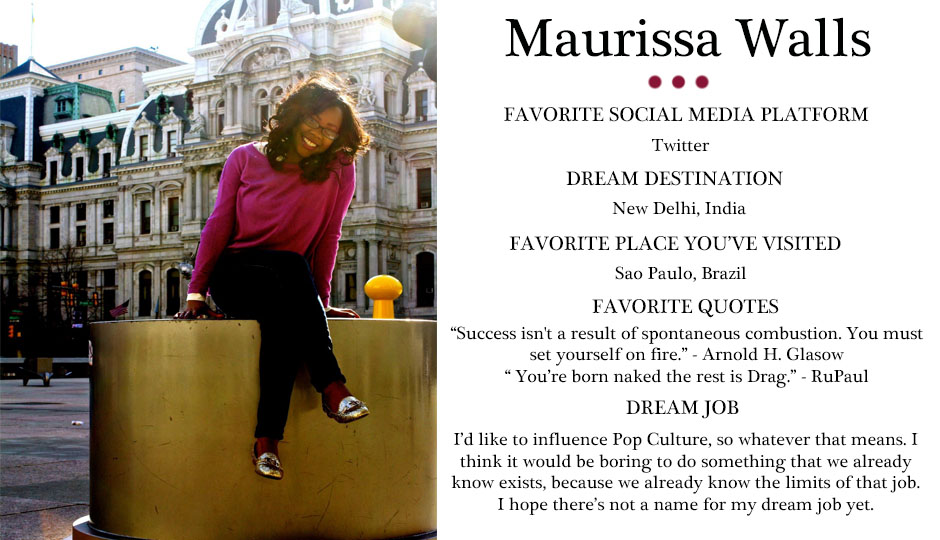
It’s perfectly fitting that Maurissa Walls, a senior at The George Washington University, is also the Director of Marketing and Public Relations for Smart Girls Group (SGG). She’s definitely one of the smartest people we’ve met and undoubtedly has an extremely bright future ahead of her. We found out about this inspiring woman by word of mouth - her name kept popping up in conversation around campus and it was no secret that she was a leader at GWU, making her mark one student at a time through freshman orientations and volunteerism.

As both a student and aspiring market strategist, Maurissa has never shied away from a challenge. For over two years she has strategized all of the marketing and advertising campaigns for SGG, manages a full team of Smart Girls, and even contributes to the digital magazine - The Smart Girl’s Guide. We are elated to introduce to you Maurissa Walls!

Name: Maurissa Walls
Age: 22
Education: George Washington University, Bachelor of Business Administration concentration in Marketing
Follow Personal: Twitter | Instagram | Facebook

Carpe Juvenis: How do you define ‘Seizing Your Youth’?

Maurissa Walls: Finding the balance between preparing yourself for adulthood and all of the responsibilities and pressures that come with it and being completely spontaneous enough to try as many things out of your comfort zone as you can. I think seizing your youth in this way allows you to make a life out of prioritizing having new, fun, adventurous experiences without compromising being a responsible adult because you’ve already made a habit out of finding the balance between the two.

CJ: What made you decide to attend college in Washington, DC, and how has the experience influenced you as an individual?

MW: I honestly ended up in DC because I was too scared at the time of moving to and living New York. I thought it would be a bit too overwhelming and hard for me to adjust. There’s nothing wrong with pacing yourself, if you know what would be best for you, and I truly believe DC is what was best for me at the time. I really wanted to be in an exciting city , and going to college in DC has impacted who I am today tremendously. Going to GW and living in DC has taught me not only to have an appreciation for culture and people but to also celebrate them. Being here has been an incredibly freeing experience. As I’ve developed and changed here I’ve allowed myself to celebrate my own complexities. I’ve learned from other people here that they can be a professional, and artists, and a mentor, and an activist, and so many things at once. I’ve learned not to limit other people or myself to just one box.

CJ: You are currently the Director of Marketing & Public Relations at Smart Girls Group. What does your role entail?

MW: My role at Smart Girls Group includes overseeing the strategic marketing and public relations vision of the company. I work with a really talented group of social media managers, PR managers, graphic designers, and writers to help drive our branding online and promote all of Smart Girls’ amazing offerings, services, and products.

CJ: What has been the most rewarding aspect of your work with SGG so far?

MW: Working with my team and our wonderful staff has been my favorite part of Smart Girls Group. I love seeing people grow in their positions. Going back to see work of girls on my team from a year or two years ago looks completely different from what they are able to do now. It’s so rewarding to watch people on my team develop their skills, talents, and professionalism and gain confidence in their own capabilities.

Maurissa 3 crop HZCJ: What has been the most unexpectedly exciting part of being involved with a young and growing company?

MW: I didn’t think it would be possible to grow such strong bonds with people online through emails and video conferencing. Those of us on staff are at several different colleges around the US and had never meet in the same room before. When we met for the first time all together at our first conference last summer, it was hard for us to convince people we were physically meeting for the first time. We get along and work so well together. We’ve created such strong bonds and I didn’t expect that to happen. Seeing this come to life at our conference for so many other girls that work together was so rewarding. It definitely proved to me that big results and big impact can come out of small packages.

CJ: How do you deal with difficult days and move forward?

MW: Remembering that I’ll still be alive in the end. There’s nothing more humbling and no easier way to calm yourself down than using a birds-eye view on a tough situation situation. My tough situations don’t even seem valid, considering what is going on in the world. Nowadays I’m usually laughing at my problems. There are some tough times that are harder to laugh through and I will just let myself feel what I am feeling for a moment. Crying, yelling, or whatever I need to do to get it out. But ultimately I realize I can either let myself just exist being upset or I can take action by doing the best that I can. The next day is probably coming, difficult or not, whether I like it or not, so I can at least try to make the best adjustments that I can to make it better.

CJ: What two main pieces of advice would you give to an incoming freshman college student?

MW: I told all of my new students the same advice all summer: use your resources and just take as much stuff as you can. You don’t realize how many “free” things that you are paying for in college until you start budgeting for life after. Then you realize how much free stuff and helpful resources that you left behind. There are so many departments at offices and schools that are begging for students to use their services and as a freshman I thought that I needed to work my way up in order to take advantage. Obviously that’s not true, you can jump in and start taking advantage. That’s not limit to school resources. I encourage freshman to apply for that internships they don’t think they can have or visit that place that they don’t think they can go to. The world is very forgiving of college students - especially freshman.

CJ: You are an aspiring marketing strategist. What originally drew you to this career choice and why?

MW: I’ve wanted to be in marketing since the 6th grade. I liked a writing project that we did where we had to design an ad and create the copy for a cereal commercial. I learned through that project that I like to influence people and I’ve kept with it because I realize there are multiple ways to do it. I’ll be going into buying in the retail industry, and that still feels like marketing to me, because I am in a position to influence and shape people’s experiences when they walk into a store. I like that marketing challenges you find new ways to influence because people are changing all the time.

CJ: What is the best piece of advice you’ve been given?

MW: My dad always told me growing up to stay connected with people. It’s becoming harder to do as you get older and busier, but I think it is extremely important. When people that I meet abroad, at school, or in programs have a real impact on me I try to stay connected to them. I think it helps to keep you aware of what you learned and how you’ve grown by be surrounded by the people that have helped to get you to that place.

CJ: What is your favorite book?

MW: Things Fall Apart by Chinua Achebe.

Maurissa Group HZCJ: How do you stay organized and juggle all of your responsibilities? Are there specific tools you use?

MW: I’m not a master yet, but I have system that seems to works for me. I use a combination of iCal, a plan book, and a clipboard of to-do lists. I’ve found that it helps me to have multiple touch points. If I have something on my iCal for the day with a notification before, see it in my planner, and have it on my to do list it usually will get done.

Color-coding is also really important and I make sure that I use the same color codes across my three planners. I like being able to look at my schedule at the beginning of the week and visually see that there are a lot of orange student org activities and know that it will be a fun week or to see a lot of blue academic slots to know that I have to crack down early in the week.

CJ: You will be graduating from the George Washington University in 2015. What are your next steps?

MW: I’ll be working in the Merchant (buying/planning) executive program at Macy’s HQ in New York. I am really excited about my job, I think it is well suited for my skills and it will challenge me in new ways. I think it will be a more creative and challenging way for me to use marketing to influence people.

CJ: What advice would you give to your 15-year-old self?

MW: I would tell myself that I am exactly who I am supposed to be. I’ve mostly had the same personality, spirit, and energy my entire life and I’ve always known that. I would tell myself to keep listening to myself. I’d promise myself that I would be really grateful for being exactly who I am later down the road and that it is for a good purpose.

Maurissa Walls Qs

Photos courtesy of Hannah Ziegler, Emily Raleigh, and Veronica Graves

aysiaSAvolunteer
TravelVolunteerism

“Where am I?” is all that crossed my mind when I was volunteering in South Africa the summer before my freshman year of college. In honor of my high school graduation, my family and I decided to break out of our comfort zone and stray from our usual lounging vacations and plan one that exposed us to a different world. With an organization I would recommend to everyone - Global Vision International (GVI) - I lived in a town outside of Cape Town called Gordon’s Bay to teach basic English and Math to children at a devastatingly poor, but dedicated school called A.C.J. Phakade Primary. It wasn’t until this remarkable experience that I realized how moving and important giving back, especially in a country as dynamic as South Africa, truly is.

Here are three main reasons you should highly consider “The Rainbow Nation” for your next volunteering venture.

The children need your help.

Many primary schools around Cape Town require its students to take an entrance exam into high school. While this may seem easy enough, trouble arises for native Xhosa-speaking - one of the country’s 11 official languages, spoken primarily by the black population surrounding Cape Town - students when they have to take the English-only exam. English is not part of school curriculums, so the only way a student knows English is if their parents taught them or they picked it up from American movies. For many of the eager students, an English volunteer is the only chance they have to learn the language well enough to get into high school. If they don’t pass, sadly they are stuck in primary school until they get it right.

Put your own problems into perspective.

In college, getting a D on a midterm, getting into arguments with friends, and not living in your preferred dorm might seem like the end of the world, but once you explore a slum you begin to see life differently. Surrounding Cape Town are “townships,” poor, rag-tag neighborhoods mainly inhabited by black South Africans who were kicked out of the city during Apartheid. After seeing children come to school wearing no shoes and a school with a rat problem and gaping holes in its walls, you’re bound to realize how fortunate you are.

aysiaSA1

Meet people from all over the world.

With GVI, I had the opportunity to meet likeminded young people from all over Europe, Africa, and Australia. It turns out that South Africa is a hot destination for the millennial generation because of its stunning landscapes and Cape Town’s stylish appeal. Even about four years later, I keep in touch with the friends I made and now always have a couch to sleep on in case I visit any of their home countries!

I urge you to consider all of these points if you are seriously thinking about doing a volunteer trip. Remember, as responsible citizens of the world and Carpe Juvenis enthusiasts, it is up to us to make a better tomorrow!

Image: Photos courtesy of Aysia Woods

CultureLearn

If Ireland is on your list of places to go, take some time to read this combination of Irish authors, history, memoirs, and fictional tales before your travels. Reading about a country you will soon explore will make your adventures rich with knowledge and more fulfilling. Whether you’re reading a book by an Irish author or learning about how the Irish used to live in the 1900’s, there’s nothing like learning as much as you can before a trip to get the most out of it and see those stories come to life.

ireland 1ULYSSES BY JAMES JOYCE

Ulysses is considered to be one of the most important works of Modernist literature. In this classic novel by Irish writer, James Joyce, the encounters of Leopold Bloom in Dublin on June 16, 1904, are chronicled. Though lengthy, this book is a must-read.


ireland 2HOW THE IRISH SAVED CIVILIZATION BY THOMAS CAHILL

If you’re a history buff, this untold story of Ireland’s role in maintaining Western Culture and how Ireland helped Europe transition and evolve from the classical age of Rome to the medieval era will be right up your alley.


ireland 3A SECRET MAP OF IRELAND BY ROSITA BOLAND

Rosita Boland takes readers on a tour through Ireland’s 32 counties and shares her extraordinary (and very unusual) travels.


ireland 4TO SCHOOL THROUGH THE FIELDS BY ALICE TAYLOR

A charming memoir by Alice Taylor who shares her Irish childhood and the memories that accompany it.


ireland 5LET THE GREAT WORLD SPIN BY COLUM McCANN

Though this novel takes place in New York City in the 1970’s, Irish author Colum McCann’s writing is worth getting to know before making your way to his homeland.


ireland 6THE BACK OF BEYOND: A SEARCH FOR THE SOUL OF IRELAND BY JAMES CHARLES ROY

A noted authority on Irish travel and history, James Charles Roy guides readers (and in the book, a group of Americans), through the backwaters of ancient Ireland.


ireland 7GULLIVER’S TRAVELS BY JONATHAN SWIFT

A classic of English literature, this novel by Irish writer Jonathan Swift is a satire on human nature and a parody of the traveler’s tales sub-genre. For a literary adventure, pick this book up before your real-life adventures.


ireland 8DUBLINERS BY JAMES JOYCE

In Joyce’s collection of short stories, he describes with great detail his observations of the life of Dublin’s poorer classes. As Joyce brings Dublin to life, there’s no way you won’t be immersed in lives of Dubliners in the 1900’s.


ireland 9A SHORT HISTORY OF IRELAND BY RICHARD KILLEEN

For a quick read about Irish history. A good starting point and overview before your travels.


ireland 10THE PICTURE OF DORIAN GRAY BY OSCAR WILDE

Irish writer Oscar Wilde wrote this philosophical novel in 1890, and it’s worth reading before traveling to this author’s homeland.


ireland 12THE MODERNISATION OF IRISH SOCIETY: 1848 - 1918 BY JOSEPH LEE

For history and political fans, read about how Ireland became one of the most modern and advanced political cultures in the world at that time. Get a more in-depth look at Ireland’s history and how it modernized.


What books on Ireland have you found interesting? Happy reading and safe travels!

Greece Flag
CultureTravel

While it is true most travelers prefer non-stop flights to those with any layovers, I say, why not turn an inconvenient few hours into an opportunity to explore? The Greek capital city, Athens, is not only a common European layover stop, but also a beautiful fusion of ancient history with a youthful flair. Having been lucky enough to experience the spirited city a few times now, I’ve created the ultimate layover guide that will help you make the most of your quick pit stop in Athens. Let’s get into it; or as the Greeks would say, Opa!

Greece 2

8 hours (7 am – 3pm)

As most flights from the States land in Europe bright and early in the morning, there is plenty of time to do all the necessary bits. By “necessary bits,” of course this means none other than the Acropolis. This massive ancient citadel hovers over the entire city, as you can see it from nearly anywhere in the city. Wind back and forth across the rocky outcrop for about 15 minutes until you reach the summit, and you are in for an unforgettable experience. While on top of the Acropolis, not only can you see a panoramic view of Athens, but you can also see the Parthenon and other architectural masterpieces that have been restored to look as proud as they did in 5th century BC. Take it all in and think about how much world history you are standing on top of…literally.

When you’re ready to move on from the beauty of the Acropolis, I recommend hiking down and walking just a few blocks to the Acropolis Museum, where hundreds of rescued, restored, and collected artifacts are housed from the ruins. Getting up close to each piece and examining its every intricate detail is a remarkable thing.

greece

12 Hours (7 am – 7 pm)

Spend time perusing and people watching in the animated, and ever loving Monastiraki Square, located near the historical Plaka neighborhood. To this day, I have never seen so much affection in one place. In the square, Greeks are often tightly hugging dear friends, passionately kissing their lovers, or jesting about with adorably dressed young children. Shop the windy side streets and browse all the flea markets, souvenirs, and trinkets. It’s a wonderful place to relax, enjoy your company, and of course grab a quick bite!

Thanasis is a restaurant well known for their mouth-watering souvlakis, a popular Greek dish with your choice of grilled meat, tzatziki sauce, veggies, and sometime fries, tightly wrapped in a fluffy pita. It’s conveniently located right on Monastiraki Sqaure, so you can involve your taste buds in the love fest, as well.

In case you want a more formal meal, only a block or so away from the square is an ultramodern, luxurious hotel called A for Athens. Take their terrifying small elevator (it’s worth it, I promise!) to the very top floor and get ready for more great views, food, and drinks. The magnificently lit Acropolis and Greek techno music serve as a backdrop while you sip on your beverage of choice and enjoy modern takes on traditional Greek cuisine. Keep an ear out for all of the languages you’re bound to hear surrounding you – it is remarkable how many international people flock to this great spot!

18 Hours (7 am – 1 am)

Make your way to the main square in Athens, Syntagma Square. This is often referred to as the “heart” of the city as Greek Parliament is located here, not to mention a common site for political demonstrations. In the square are various food vendors and a lovely park area, while the side streets contain some of Greece’s best shopping. For all the serious shoppers, this is a top priority before your layover comes to an end. There are international chain stores, but also boutiques unique to Greece, so you really get a taste of everything fashion-wise!

Finally wrap up your super quick layover in Athens by taking the metro to Soho Bar Athens in the Gazi neighborhood. This club and bar has a neat atmosphere, and is usually full of young professionals and or the “starving artist” type. Prepare for your next flight with a cold glass of ouzo and call it a day!

Image: Aysia Woods (Acropolis and Monastiraki Square); Carpe Juvenis (Greek Flag)

Lucury
Culture

Luxury brands once garnered association with the elite class being the ultimate pillar of success. Today the luxury market has grown to encompass a globally engaged population of younger consumers who come from more diversified backgrounds with greater spending habits. The youth consumer has dramatically shifted over the years, and to date, its influence in the eyes of several leading global luxury brands has been noted.

Through avenues such as social media, advertising, and increased travel, more and more young consumers have their eye on buying into the luxury goods market. The increase of spending habits from younger consumers is mainly prevalent in emerging markets, as certain parts of the world place high value on brand name identity.

According to Bain and Company, a Boston based global management firm, it forecasts the worldwide luxury market to grow to $290 billion USD in 2015, as the demand for high-end luxury - especially clothing and accessories - rises in emerging markets such as India, China, Brazil, and Russia.

Interestingly enough, luxury brands have not been highly affected by many of the transpiring financial events that have hit various other sectors globally. These brand names have built their reputations and financial holdings by remaining strategically branded entities to their worldwide consumers. As the market for luxury goods is poised to grow, these brands are using their overall reputations to revamp and repackage luxury to the new emerging and elite consumers who have higher purchasing powers elsewhere.

European markets are poised to see a 2% growth, which is considerably low for the region. Japan will experience a sharp 12% decline in the consumption of luxury brands. The East Asian region of Greater China will see growth at upwards of 4% splitting growth between Hong Kong, Macau, and Mainland China. Overall, the Chinese consumer has increased from roughly 25% to upwards of 30% of the market.

Sales in the Arab world also remain strong with an over five percent estimated growth in the luxury market with strong focus residing on the Emirates, while Saudi Arabia now becomes the regions second largest luxury market. Continent-wide growth for Africa rapidly showcases an emerging region for long term growth and vast potential with 11% growth and expansion expected with strongholds in Angola, Morocco, Nigeria, South Africa, and Rwanda. Southeast Asia comes in at roughly 11% becoming the highest potential earning demographic with luxury consumers demanding lucrative brands in Singapore, Malaysia, Indonesia, Vietnam, and Thailand.

The bottom line remains that as growth for luxury brands rapidly slows in the Americas and Western Europe, many of the most important companies within this sector are targeting a newer demographic of young brand-conscious consumers globally.

The increasing changes and connections youth consumers and global luxury brands now share is a trend that continues to grow. Youth consumers are driving how major multinational brands shift their approach for growth and sales; and through this method, the spending habits of the youth market remains on track to grow.

The millennial generation can learn a lot from these current market trends, as they tend to foster the next phase of growth in several of the previously mentioned international markets. Your presence is important in how the market shifts to look younger and to appeal to savvy and wealthy foreign nationals abroad. Understand that these brands will continue to affect your lives and consumption habits, especially as they become more prevalent in greater avenues of young people’s lives.

Currently according to Forbes, the top ten most valued brands globally come mostly from the fashion, accessory, and spirits industry.

  1. Louis Vuitton ($19.4 Billion)
  2. Hermès ($7.86 Billion)
  3. Gucci ($7.47 Billion)
  4. Chanel ($6.22 Billion)
  5. Rolex ($5.53 Billion)
  6. Hennessy ($5.40 Billion)
  7. Cartier ($4.91 Billion)
  8. Moet & Chandon ($4.85 Billion)
  9. Fendi ($3.47 Billion)
  10. Prada ($2.7 Billion)

Image: Blake Bronstad

DC
CultureTravel

What do Scandal, House of Cards, and Bones all have in common? Aside from them making for an absolutely ideal television binge, they all take place in your next daytrip destination: Washington, D.C. This powerful city has been my home for the past four years and I’ve learned that it has much more to offer than architecturally impressive government buildings. Washington, D.C. is teeming with art galleries, farmers markets, and funky neighborhoods waiting to be explored. Welcome to the Nation’s Capital!

Morning

Good Morning! If you’re like me, you wake up ready to eat, so head over to Ted’s Bulletin in southeast D.C. for breakfast. Known for their homemade pop tarts, this timeless diner-style restaurant serves breakfast all day. I recommended The Big Mark Breakfast comprised of eggs, bacon, sausage, hash browns, toast, and a pop tart… because why not treat yourself?

After your delicious breakfast, walk just a few blocks and explore Eastern Market, D.C.’s original food and art market. There’s no better way to begin a day in the city than pleasing all your senses by tasting fresh food samples, appreciating stunning artwork and antique trinkets, and smelling the fragrant homemade candles and incense. The market has such a magnetic energy about it that can put even the grumpiest person in a bright mood.

Afternoon

By this time hunger is likely creeping up again which means it is time to grab lunch at Founding Farmers. Beyond satisfying its hungry customers, this friendly hotspot works to support regional farmers by serving sustainably-farmed and locally-grown food. Try their Farmers Slaw Reuben or Creamy Vegetable Bacon Bucatini, both dishes are like nothing I’ve ever tasted and simply delicious.

This afternoon, be a proud tourist by a visiting a few of D.C.’s most famous sites. Because you have just one day in the city, I would pick just two or three you are most interested in. My favorite spots in the city are The White House, the Lincoln Memorial, and The National Museum of the American Indian. Take your time at each of your destinations, relishing in its immense history and appreciating its impressive construction. After all, you’re in the heart of America.

Evening

After a busy day in Washington, D.C., begin to wind down with dinner at one of the city’s beloved restaurants. For those looking for a place with a story, try Ben’s Chili Bowl or its neighboring upscale restaurant, Ben’s Next Door in the U Street Corridor. Only differing in their atmospheres, Bens’ celebrates the historically African American presence in D.C., as it’s survived through 1960s race riots and gentrification. The energetic restaurants serve D.C. signatures, like half-smoke chili dogs, and are especially lively on the weekends.

For those looking to try new cuisine, go to Das, and Ethiopian restaurant in the Georgetown neighborhood. Romantically lit with candles on each table, Das serves traditional Ethiopian cuisine consisting of the fluffiest injera (a sourdough-risen flatbread with a unique, slightly spongy texture) and a variety of spicy meats and vegetables. I usually get their combination plate, which has injeria with flavor-packed chicken, beef, greens, potatoes, chickpeas, and egg. Don’t forget to order their chocolate cake; something about it is inexplicably magical.

If you still have some energy left, head over to the Dupont Circle neighborhood to people watch at its fountain or browse the series of quaint boutiques and stores. The picturesque area is usually quite relaxing with street performers or live-music at nighttime. Be sure to stop by Kramerbooks & Afterwords Café. Open nearly all hours of the day, this part bookstore, part café is frequented by passionate writers and mysterious-looking intellectuals. If we are being honest, I’ve only ever been here for dessert, but let me tell you, their Rustic Apple Tarts are the only way to end a day in Washington, D.C.

Time-Permitting

If you have time, honor our troops in Arlington National Cemetery, shop in Georgetown, or catch a free performance at The Kennedy Center.

*Hey day-trippers, check out itineraries for Philadelphia and Savannah!

Image: Aysia Woods